


Company News
0102030405
Which Electrical Steel Is Better for Transformer and Motor Applications
2026-08-31
CRGO Steel vs. NGO Steel: Which Electrical Steel Is Better for Transformer and Motor Applications?
Although both materials belong to the electrical steel family, they are designed for different magnetic operating conditions and provide different performance advantages. Selecting the wrong material can increase energy losses, reduce equipment efficiency, and raise manufacturing costs.
This article compares CRGO and NGO electrical steel in terms of magnetic properties, core loss, magnetic induction, efficiency, processing performance, and application suitability, helping buyers and engineers choose the most appropriate electrical steel grade.
What Is CRGO Steel?
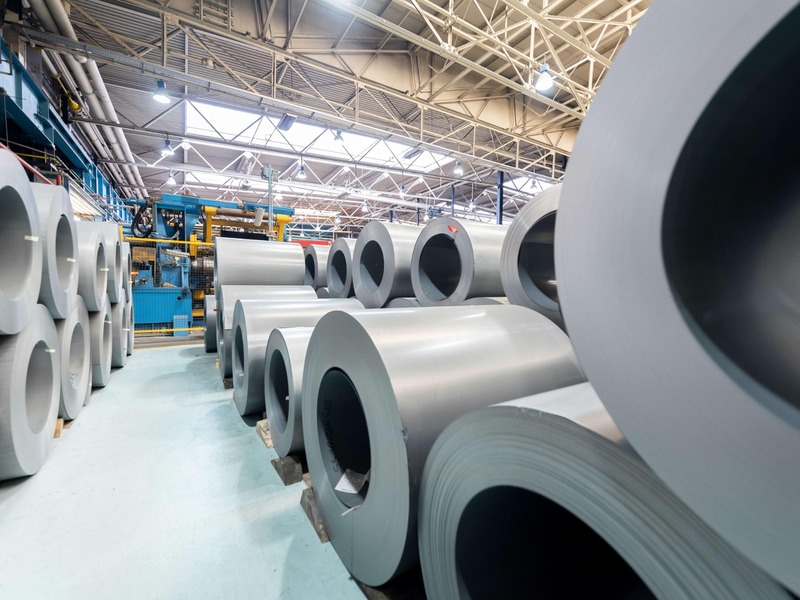
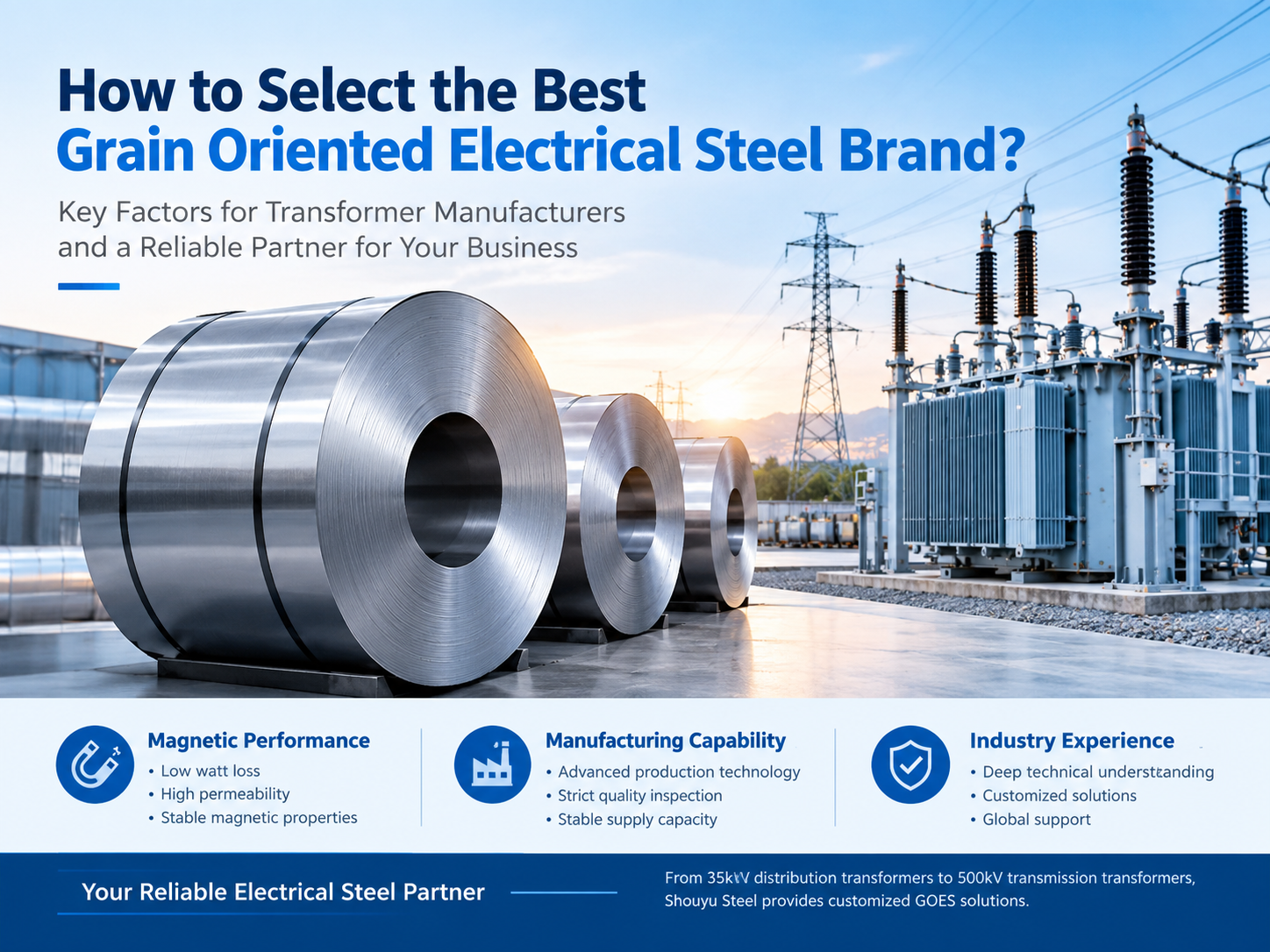
CRGO steel is specifically designed for applications where magnetic flux flows primarily in one direction.
Through advanced cold rolling and secondary recrystallization, the crystal grains become highly oriented, resulting in:
-
Very low core loss
-
High magnetic permeability
-
High magnetic induction
-
Excellent transformer efficiency
CRGO steel is mainly used for transformer cores and other static magnetic equipment.
What Is NGO Steel?
NGO steel has a non-oriented grain structure, allowing magnetic flux to flow efficiently in multiple directions.
Its characteristics include:
-
Uniform magnetic properties in all directions
-
Good rotational magnetic performance
-
High mechanical strength
-
Excellent punching and stamping performance
NGO steel is primarily used in rotating electrical machines.
CRGO vs. NGO: Key Differences
| Property | CRGO Steel | NGO Steel |
|---|---|---|
| Grain Orientation | Oriented | Non-oriented |
| Magnetic Flux Direction | One direction | Multiple directions |
| Core Loss | Lower | Higher |
| Magnetic Induction | Higher | Moderate |
| Permeability | Higher | Lower |
| Efficiency | Higher in transformers | Better for rotating machines |
| Typical Application | Transformers | Motors and generators |
The fundamental difference is that CRGO is optimized for directional magnetic flux, while NGO is optimized for rotating magnetic fields.
Why CRGO Steel Is Preferred for Transformers
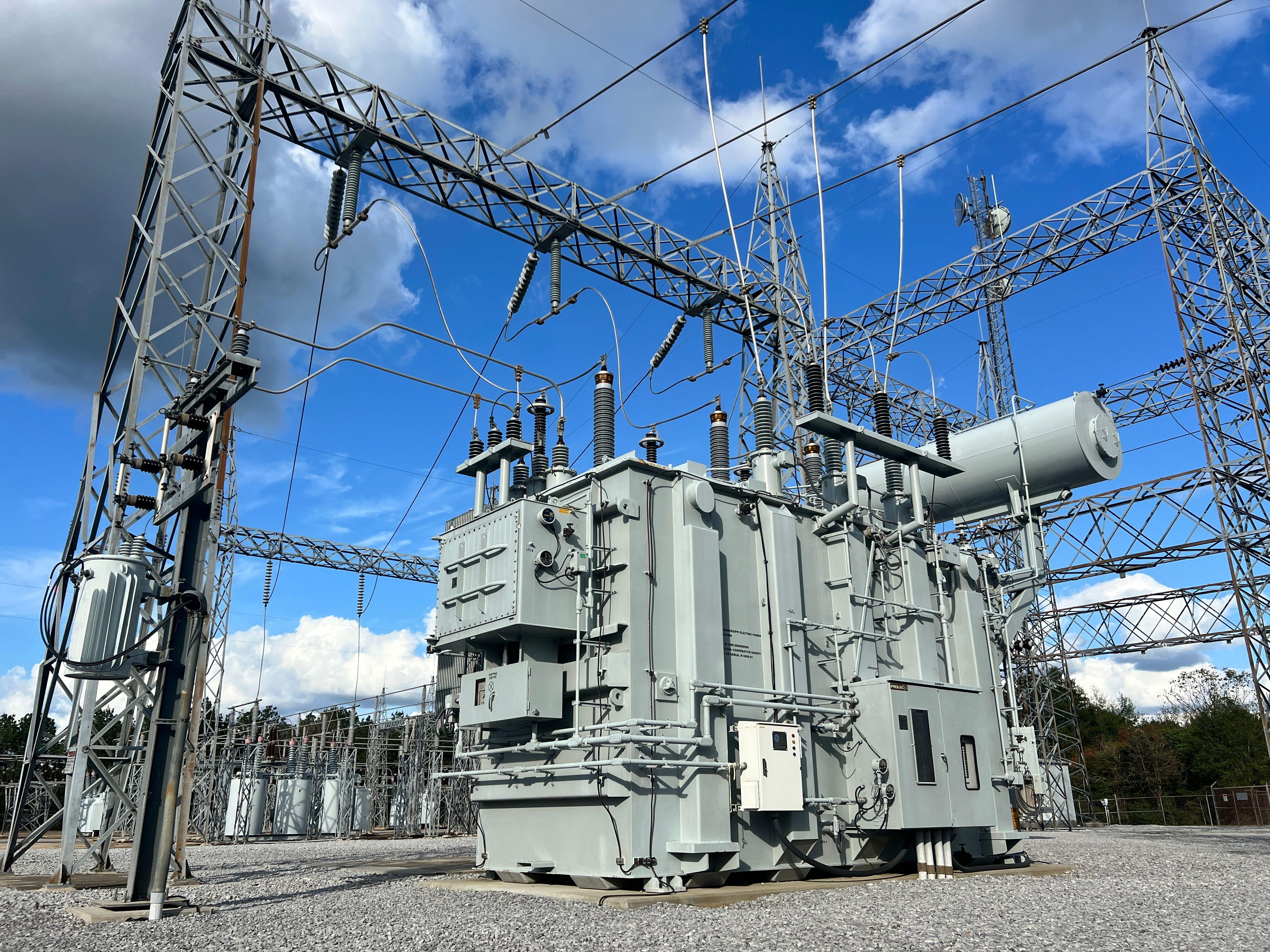
Transformer cores operate under alternating magnetic flux that follows a predictable path through the laminated core.
Because CRGO steel has highly oriented grains, it provides:
Lower Core Loss
Lower no-load losses improve transformer energy efficiency.
Higher Magnetic Induction
Higher induction allows:
-
Smaller transformer cores
-
Reduced material consumption
-
Higher power density
Better Long-Term Efficiency
Power transformers operate continuously for decades, making energy loss reduction extremely valuable.
For distribution and power transformers, CRGO steel is generally the industry standard.
Why NGO Steel Is Better for Electric Motors
Electric motors generate rotating magnetic fields.
Because magnetic flux changes direction continuously, directional grain orientation offers limited advantage.
NGO steel provides:
Isotropic Magnetic Properties
Magnetic performance remains relatively uniform regardless of flux direction.
Better Rotational Performance
This improves motor efficiency under rotating magnetic conditions.
Superior Punching Performance
Motor laminations require extensive stamping, and NGO steel generally offers better processing characteristics.
Core Loss Comparison
Core loss is one of the most important selection factors.
In transformer applications:
-
CRGO steel typically provides significantly lower core loss.
-
NGO steel usually produces higher no-load losses.
Lower core loss means:
-
Reduced electricity waste
-
Lower operating temperature
-
Improved transformer efficiency
-
Better compliance with energy regulations
For transformer manufacturers, CRGO steel usually provides a clear performance advantage.
Magnetic Induction Comparison
High magnetic induction allows equipment designers to reduce core size.
CRGO steel generally provides higher magnetic induction than NGO steel.
This enables:
-
Smaller transformer dimensions
-
Reduced core weight
-
Lower copper consumption
-
Improved equipment compactness
For high-efficiency transformer designs, magnetic induction is a major advantage of CRGO steel.
Cost Considerations
NGO steel is often less expensive than premium CRGO grades.
However, material price alone should not determine selection.
Initial Material Cost
NGO may offer lower purchasing cost.
Operating Cost
CRGO often reduces lifetime energy losses.
Total Cost of Ownership
For continuously operating transformers, CRGO usually provides better economic value over the equipment lifecycle.
Processing Differences
CRGO Processing
Requires:
-
Careful cutting
-
Controlled stress relief
-
Precise core assembly
-
Attention to rolling direction
Improper processing can reduce magnetic performance.
NGO Processing
Offers:
-
Easier punching
-
Better stamping productivity
-
Greater directional flexibility
-
Simpler manufacturing
Motor manufacturers often benefit from NGO’s processing advantages.
Which Material Should You Choose?
Choose CRGO Steel If You Manufacture:
-
Power transformers
-
Distribution transformers
-
High-voltage transformers
-
Energy-efficient transformers
-
Reactors
Choose NGO Steel If You Manufacture:
-
Electric motors
-
Industrial motors
-
Generators
-
Alternators
-
Rotating electrical machines
A simple rule is:
Static magnetic equipment → CRGO
Rotating magnetic equipment → NGO
Common Purchasing Mistakes
Using NGO for Transformer Cost Reduction
Lower initial material cost may increase lifetime energy losses.
Using CRGO for Motor Laminations
Directional grain orientation provides limited benefit in rotating magnetic fields.
Ignoring Magnetic Flux Direction
Flux direction should always be the first selection criterion.
Overlooking Processing Capability
Manufacturing equipment and production processes should match the selected material.
How Tangshan Shouyu Supports Material Selection
At Tangshan Shouyu Electromagnetic New Materials Co., Ltd., we help customers select electrical steel materials based on:
-
Equipment type
-
Efficiency requirements
-
Core design
-
Manufacturing process
-
Export market standards
-
Long-term operating performance
Our technical team can recommend the most suitable electrical steel solution for transformer and electromagnetic applications.
Conclusion
CRGO steel and NGO steel are not competing products; they are materials designed for different magnetic environments.
CRGO steel offers superior performance for transformer applications through low core loss, high magnetic induction, and excellent directional magnetic properties.
NGO steel provides better performance for motors and generators through uniform magnetic properties and excellent rotational magnetic characteristics.
For transformer manufacturers seeking maximum efficiency and energy savings, high-quality CRGO steel remains the preferred electrical steel material.
For more information about grain oriented electrical steel products and transformer material solutions, visit www.shouyusisteel.com and contact our technical team for professional material selection support.