You know, in today's changing materials market, Silicon Stainless Steel has really started to make waves. It's this pretty special alloy known for its incredible strength and resistance to corrosion — which is a big deal for lots of industries. Because of its rising popularity, a bunch of suppliers in China have jumped into the game, and honestly, China’s become sort of the go-to manufacturing hub for this stuff.
A lot of companies are out there working hard to meet the tough standards demanded by sectors like construction, automotive, and aerospace. But, honestly, not every supplier is created equal. It’s super important to get a good grip on the ins and outs of Silicon Stainless Steel and the companies that supply it. Some guys really shine in specific areas, while others offer a wider variety of products.
Picking the right supplier isn’t just about price — you want reliability and products that last. But how do you figure out who’s top-notch? Things like how experienced they are, their quality checks, and how good their customer service is all matter. In this list, we’ll highlight the leading Silicon Stainless Steel suppliers in China, pointing out what they do well and where they could improve. Our goal is to help businesses make smarter decisions when it comes to sourcing these materials — so they know they’re getting quality they can count on.

Overview of Silicon Stainless Steel Products in China
Silicon stainless steel has gained popularity in various industries in China. This material combines the benefits of stainless steel with the enhanced properties of silicon. The result is a product with improved strength, corrosion resistance, and durability. These characteristics make it ideal for applications in construction, automotive, and electronics.
The manufacturing process of silicon stainless steel requires precision and expertise. Chinese suppliers have made significant advancements in their production techniques. However, quality can vary widely among different manufacturers. It's essential to research potential suppliers thoroughly. Some may offer excellent products, while others might not meet required standards.
In recent years, innovation in this field has been remarkable. New alloys and formulations continue to emerge, expanding the possibilities for silicon stainless steel. Yet, buyers should approach these developments with caution. Not all new products have been thoroughly tested in real-world conditions. Choose suppliers that provide detailed product information and credible certifications. This due diligence helps ensure that you receive reliable products that meet industry standards.
Criteria for Selecting Top Suppliers of Silicon Stainless Steel
When selecting top suppliers for silicon stainless steel products, reliability is crucial. A supplier’s track record can indicate their capability and commitment. Examining previous partnerships helps assess their performance in meeting deadlines. Transparency in their manufacturing processes is also a key factor. It builds trust and assures product quality.
Additionally, evaluating technical expertise is essential. Suppliers should demonstrate knowledge about Silicon Steel properties and applications. Their capability to innovate enhances the value of their products. Observing feedback from previous clients provides insights into how well they address issues and implement solutions.
Lastly, consider the geographical location of the suppliers. Proximity can impact shipping times and costs. However, it also poses challenges if local industries face supply chain disruptions. Flexibility in adapting to market demands is another aspect to reflect upon. A supplier’s ability to scale production can be a game changer in this competitive landscape.
Leading Manufacturers of Silicon Stainless Steel Products in China
China has become a significant player in the production of silicon stainless steel products. With a blend of advanced technology and skilled labor, several manufacturers stand out for their quality and reliability. These suppliers not only meet international standards but also innovate regularly to adapt to market needs. They provide a range of products, from sheets and plates to custom-made components.
Tips: When selecting a supplier, consider their experience in the industry. Longevity can indicate reliability and performance. Also, assess their manufacturing capabilities. A well-equipped facility can handle more complex orders.
The landscape of silicon stainless steel production in China is vast. Various companies specialize in different aspects, including design and production techniques. It’s essential to evaluate their portfolio and customer reviews. While many companies boast high-quality offerings, not all maintain consistency. Researching thoroughly is crucial to avoid potential issues down the road.
Tips: Request samples for testing before committing. This provides insight into material quality and manufacturing standards. Pay attention to feedback from past clients. It can reveal strengths and weaknesses you might not consider initially.
Analysis of Supplier Performance and Market Reputation
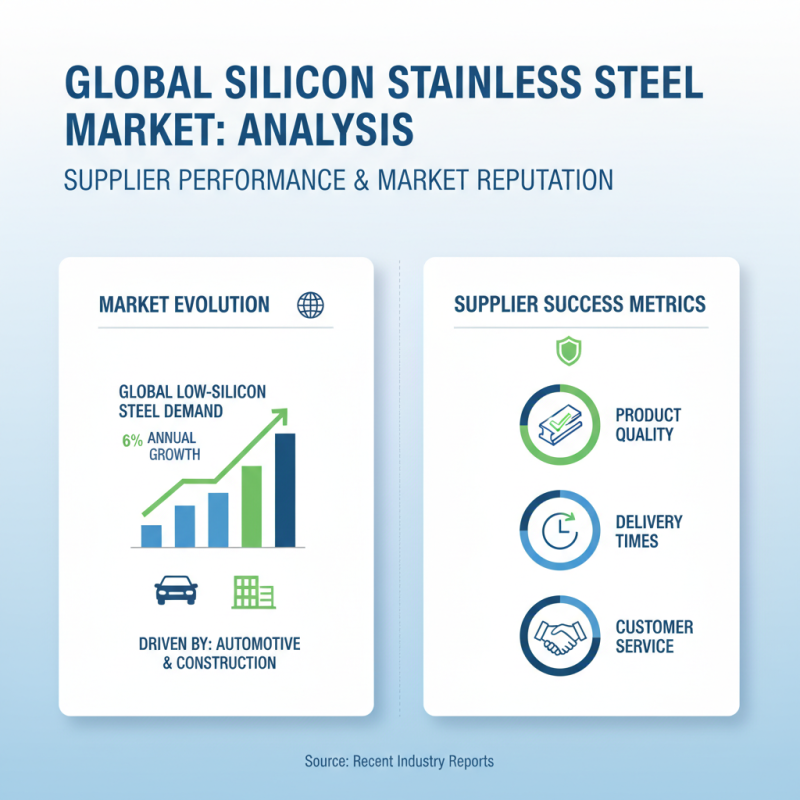
The market for silicon stainless steel products is evolving rapidly. According to recent reports, global demand for Low Silicon Steel is projected to grow by 6% annually. This increase is driven by its applications in various industries, including automotive and construction. Supplier performance in this sector can be measured through several key indicators: product quality, delivery times, and customer service.
Many suppliers remain competitive, but not all meet industry standards. A notable study indicated that only 45% of suppliers achieved a high rating for customer satisfaction. Issues such as inconsistent delivery schedules and poor communication often contribute to dissatisfaction. Moreover, while some suppliers excel in technical capabilities, they may lag in sustainably sourcing materials, raising concerns about their long-term reliability.
Market reputation is critical. For instance, companies that invest in quality assurance processes typically enjoy a better standing. To compete effectively, suppliers must prioritize transparency and accountability. However, gaps still exist in how they report their sustainability practices. A mere 30% provide detailed information on sourcing, highlighting an area for potential improvement and reflection in their operations.
Key Innovations in Silicon Stainless Steel Product Manufacturing
The manufacturing of silicon stainless steel products has seen significant advancements in recent years. With a projected market growth of over 6% annually, this sector is becoming increasingly competitive. Innovations in smelting techniques and heat treatment processes enhance the performance of materials like
M36 Silicon Steel. This steel type offers exceptional magnetic properties and is crucial for applications in electrical motors and transformers.
One major innovation is the development of high-performance alloys. These alloys can withstand tougher environments while maintaining strength and durability. Reports indicate that the adoption of nanotechnology in steel production introduces finer microstructures, leading to improved mechanical properties. This technology, however, requires careful implementation. Companies must address potential challenges related to cost and scalability, highlighting a need for continuous improvement.
Tips: Consider adjusting your material mix to include advanced alloys. Monitor industry reports to stay updated on new developments. Engaging in collaboration with research institutions can further drive innovation. Always assess the long-term benefits versus immediate costs when investing in new technologies.
Supply Chain Considerations for Silicon Stainless Steel in China
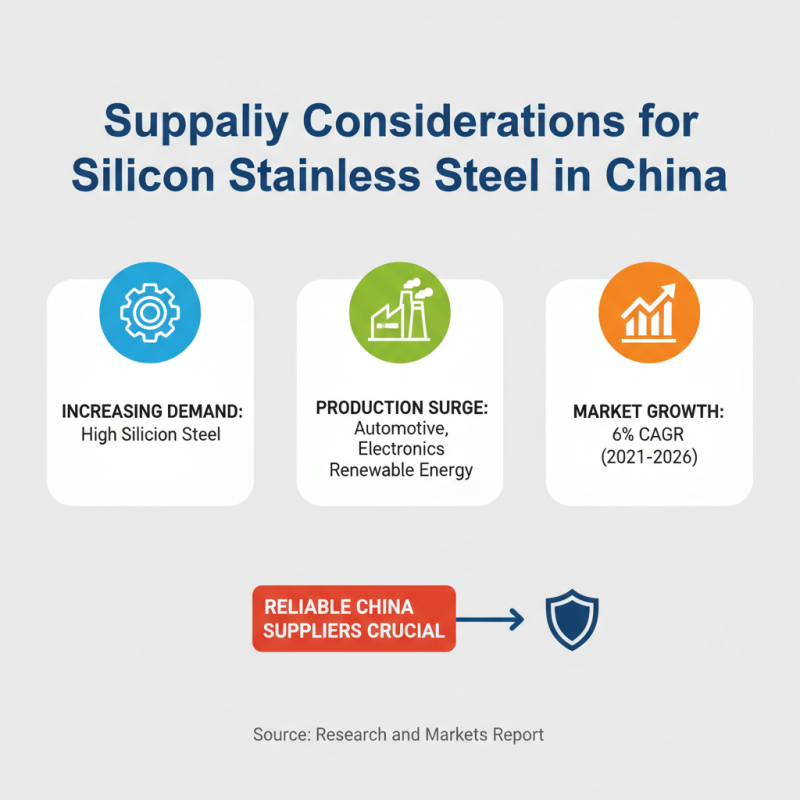
As the demand for High Silicon Steel increases, supply chain considerations are vital. In recent years, the production of silicon stainless steel products has surged. This growth is mainly driven by its applications in automotive, electronics, and renewable energy sectors. According to a report by Research and Markets, the high silicon steel market is projected to grow at a CAGR of 6% from 2021 to 2026. This trend underlines the importance of reliable suppliers in China.
China is a key player in the high silicon steel supply chain. The country has abundant raw materials and a skilled workforce. However, challenges exist. Costs and quality control can fluctuate. A study by the World Steel Association highlighted that over 30% of manufacturers face quality inconsistencies. These discrepancies can lead to project delays and increased costs for buyers—an essential factor to consider.
Moreover, geopolitical tensions and trade policies can impact supply chains. Supplier diversification emerges as a critical strategy. A balanced approach mitigates risks associated with relying on a single source. Manufacturers are encouraged to conduct thorough evaluations of potential suppliers in China. This ensures quality and stability in the high silicon steel sector.
Future Trends in the Silicon Stainless Steel Industry in China
The silicon stainless steel industry in China is poised for significant evolution. As global demand rises, manufacturers are investing in advanced technologies. These advancements aim to enhance the durability and resistance of silicon stainless steel products.
Tips: Focus on supplier relationships. Maintaining strong partnerships can lead to better sourcing and reduced costs.
Moreover, sustainability is becoming crucial. Producers are exploring eco-friendly methods, seeking to reduce their carbon footprint. This shift aligns with global trends toward sustainable manufacturing. Companies must adapt to meet these expectations.
Tips: Monitor market trends. Keeping an eye on industry changes can help businesses stay competitive.
Innovation is also on the horizon. Enhanced alloys are being developed for various applications. The versatility of silicon stainless steel makes it suitable for sectors like automotive and construction. However, uncertainties in raw material prices can impact production.
Tips: Diversify sourcing strategies. This can mitigate risks related to material shortages and price fluctuations.
Top 10 China Suppliers for Silicon Stainless Steel Products - Future Trends
This chart displays the estimated market share of various suppliers in the silicon stainless steel industry in China. The data highlights the competitive landscape and key players driving innovation and growth in this sector.
Optimizing Quality Inspection Positions: Enhancing Control Techniques for Oriented Silicon Steel Production
In the production of oriented silicon steel, optimizing quality inspection positions is crucial to ensure that control techniques effectively maintain the desired material properties. The first step in this optimization process involves meticulous pre-job preparation, which has a direct impact on the accuracy and reliability of inspection results. Calibration of essential equipment, such as magnetic measuring instruments, tensile testing machines, thickness gauges, and metallographic microscopes, must be executed in accordance with established standards. This ensures that all measurement data is precise and valid, forming a solid foundation for quality control.
Subsequently, document verification plays an indispensable role in reinforcing inspection integrity. It is imperative to obtain and review the relevant production plan, process card, inspection procedures, and judgment standards specific to the production shift. By confirming batch information and ensuring that materials meet necessary criteria, inspectors can focus on maintaining product quality. Additionally, the sampling process must be handled with equal care; verifying that sampling tools, sample boxes, and label paper are in optimal condition is vital before initiating any form of quality inspection. Through these structured preparation practices, the production of oriented silicon steel can significantly benefit, leading to enhanced control over quality outputs.
FAQS
: Reliability indicates a supplier’s commitment and track record in meeting deadlines.
Analyze their previous partnerships and their ability to deliver quality on time.
Transparency builds trust and assures clients about the quality of products.
Suppliers must understand the properties and applications of silicon stainless steel.
Proximity impacts shipping times and costs but may face local supply chain issues.
Inconsistent delivery schedules and poor communication often lead to customer dissatisfaction.
Investing in quality assurance processes typically helps improve their standing.
Only 45% of suppliers achieved a high rating for customer satisfaction.
Some excel in technical abilities but struggle with sustainably sourcing materials.
Only 30% of suppliers provide detailed information on their sustainability practices.
Conclusion
The article titled "Top 10 China Suppliers for Silicon Stainless Steel Products" provides a comprehensive overview of silicon stainless steel products in China, highlighting key factors that influence the selection of top suppliers. It discusses the critical criteria for evaluating manufacturers, such as product quality, market reputation, and innovation.
The analysis delves into the performance of leading manufacturers, examining their contributions to the industry's standards and advancements in silicon stainless steel product manufacturing. Additionally, the article addresses supply chain considerations and explores future trends within the silicon stainless steel sector in China, emphasizing the anticipated growth and technological innovations that will shape the market. Overall, it serves as a vital resource for businesses looking to understand the dynamics of silicon stainless steel supply in China.



 Contact Email
 Contact Whatsapp