Hey, have you noticed how the global appetite for Silicon Steel Strip is really picking up? It's mainly thanks to the push for electrification, renewable energy, electric cars, and the need to expand the grid. The International Energy Agency’s Electricity 2024 report predicts that, on average, world electricity demand will grow around 3.3% every year from 2024 to 2026. And the latest Global EV Outlook 2024 says we’re expecting to see more than 17 million electric cars sold this year alone. All these trends just boost the need for efficient transformer cores, motor laminations, and parts for generators.
In this guide, I’ve put together a list of ten well-known manufacturers who cater to international clients. You’ll find names like Nippon Steel, POSCO, Baosteel, JFE Steel, thyssenkrupp Steel, ArcelorMittal, Cleveland-Cliffs, voestalpine, Tata Steel, and Aperam. I looked at their manufacturing scale, different grades like non-oriented and grain-oriented steels, how well they perform in reducing core losses, coating options, how precise their dimensions are, certifications, and their ability to export. Choosing a grade with low energy loss can really help cut down waste, but keep in mind, its actual benefit depends on how the material is designed, processed, and used in your specific setup.
According to the World Steel Association’s 2024 Short Range Outlook, steel demand is still on the mend. But, it’s not the same everywhere—you’ll see regional differences for sure. So, if you’re buying, don’t just look at their annual production capacity. It’s a good idea to ask for mill test certificates, sample coils, tolerances on slit widths, coating details, and realistic lead times too. No supplier ranking is perfect; even a top-notch producer might not be right for your particular motor design or regional regulations. I’ve put together this comparison to help you out, but make sure to do your technical homework before making any commitments—that’s the key to avoiding surprises down the line.
Understanding Silicon Steel Strip and Its Industrial Applications
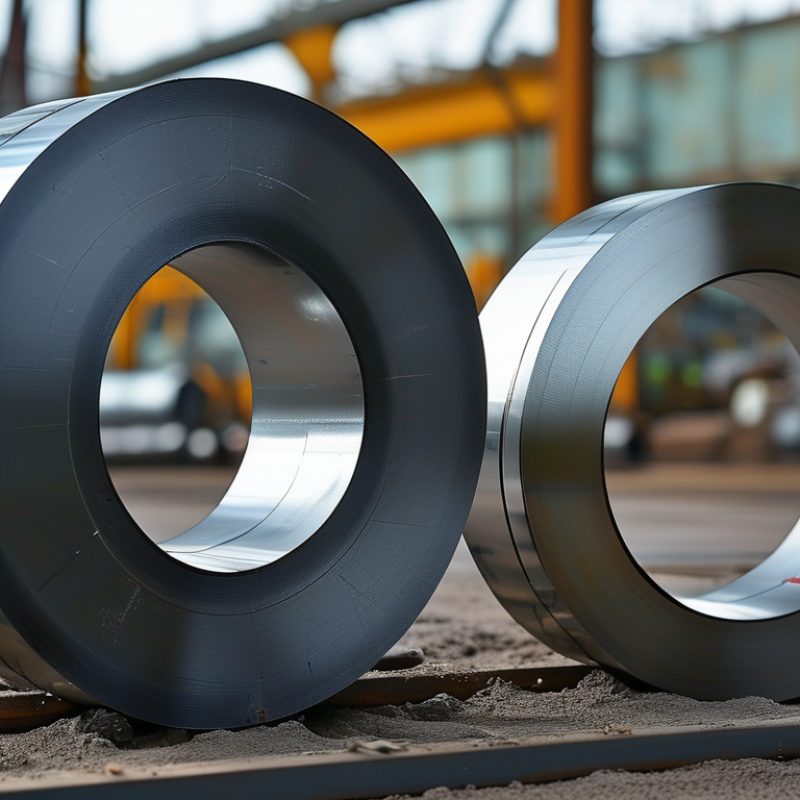
Silicon steel strip is a low-carbon electrical steel designed to reduce magnetic losses. Its silicon content improves resistivity and stabilizes magnetic performance. Grain-oriented grades suit transformer cores, while non-oriented grades support motors, generators, and rotating equipment.
The IEA’s Global EV Outlook 2024 recorded nearly 14 million electric-car sales in 2023. This growth increases demand for compact motor cores and efficient traction systems. The U.S. Department of Energy reports that electric motors consume about 46% of global electricity. Even small efficiency gains can therefore influence operating costs.
In production, Slit Silicon Steel Strip is cut into precise widths for laminations. Operators must control burr height, edge damage, coating quality, and stacking pressure. A sharp slit edge matters.
Transformer designers often examine core loss at 50 or 60 hertz, magnetic permeability, and lamination thickness. The IEC 60404 series provides widely used measurement frameworks for electrical steel. However, laboratory values do not always match factory results. Poor handling can scratch insulation coatings or distort thin strip. That weakness deserves attention. Buyers should request test certificates, lot traceability, dimensional records, and clear loss data at stated flux density. A lower price may hide higher assembly waste or increased heat during service. Supplier comparisons should include processing capability, not only chemistry and nominal thickness.
How the Top 10 Manufacturers Are Selected and Compared
Selecting the top 10 silicon steel strip manufacturers requires more than comparing annual output. A credible review should examine electrical steel grades, measured core loss, thickness tolerance, and production consistency. World Steel Association data recorded 1.89 billion tonnes of crude steel production in 2023. However, ordinary steel volume does not prove electrical steel expertise. That distinction matters.
The comparison begins with verified mill capabilities and third-party test records. Buyers should request Epstein-frame or equivalent core-loss data, coating details, and batch traceability. For Slitted Silicon Steel Strip, edge quality is critical. Burrs can damage winding insulation and increase assembly waste. Slitting width accuracy, coil weight control, and packaging protection deserve separate scores. They are easy to overlook.
A practical ranking can combine technical performance, delivery history, export experience, and after-sales response. The International Energy Agency’s Electricity 2024 report highlights rising pressure on grid infrastructure and transformer investment. This supports stronger demand for efficient electrical steel, but it does not guarantee every supplier can scale reliably. Capacity claims need checking. Samples should be tested independently, especially when quoted losses appear unusually low. One weakness remains: public reports rarely disclose rejection rates or real delivery performance. Therefore, the final selection should use customer references, recent inspection records, and a small trial order before long-term contracts.
Top 10 Silicon Steel Strip Manufacturers for Global Buyers - How the Top 10 Manufacturers Are Selected and Compared
| Rank |
Anonymous Manufacturer Profile |
Primary Production Region |
Main Silicon Steel Products |
Applicable Standards |
Typical Thickness Range |
Typical Width Capability |
Supply Forms |
Export Documentation |
Selection Score |
| 1 |
Profile 01 |
East Asia |
Grain-oriented and non-oriented electrical steel strip |
IEC 60404-8-4; ASTM A677; JIS C2552 |
0.15–0.65 mm |
Up to 1,250 mm |
Master coils, slit coils, cut-to-length sheets |
Full |
93/100 |
| 2 |
Profile 02 |
Western Europe |
Non-oriented electrical steel for motors and generators |
IEC 60404-8-2; EN 10106; ASTM A677 |
0.20–0.65 mm |
Up to 1,500 mm |
Wide coils, precision slit coils, sheets |
Full |
91/100 |
| 3 |
Profile 03 |
East Asia |
Grain-oriented electrical steel for transformer cores |
IEC 60404-8-7; ASTM A876; JIS C2553 |
0.20–0.35 mm |
Up to 1,220 mm |
Transformer coils, slit coils, stacked laminations |
Full |
89/100 |
| 4 |
Profile 04 |
North America |
Non-oriented electrical steel for rotating equipment |
ASTM A677; IEC 60404-8-2 |
0.25–0.65 mm |
Up to 1,350 mm |
Master coils, slit coils, motor laminations |
Full |
87/100 |
| 5 |
Profile 05 |
South Korea |
Grain-oriented and high-permeability electrical steel |
IEC 60404-8-7; ASTM A876 |
0.23–0.35 mm |
Up to 1,220 mm |
Slit coils, transformer laminations, core material |
Full |
85/100 |
| 6 |
Profile 06 |
Japan |
High-grade grain-oriented electrical steel |
JIS C2553; IEC 60404-8-7 |
0.18–0.35 mm |
Up to 1,100 mm |
Transformer coils, slit strips, core sheets |
Full |
84/100 |
| 7 |
Profile 07 |
Eastern Europe |
Non-oriented electrical steel for industrial motors |
EN 10106; IEC 60404-8-2 |
0.35–0.65 mm |
Up to 1,250 mm |
Coils, slit strips, cut sheets |
Standard |
81/100 |
| 8 |
Profile 08 |
Southeast Asia |
Non-oriented electrical steel and transformer strip |
IEC 60404-8-2; ASTM A677 |
0.23–0.65 mm |
Up to 1,220 mm |
Master coils, slit coils, sheets |
Standard |
79/100 |
| 9 |
Profile 09 |
South Asia |
Commercial-grade non-oriented electrical steel strip |
IEC 60404-8-2; ASTM A677 |
0.35–0.65 mm |
Up to 1,200 mm |
Coils, slit strips, sheets |
Standard |
76/100 |
| 10 |
Profile 10 |
Latin America |
General-purpose electrical steel for motors and transformers |
ASTM A677; IEC 60404-8-2 |
0.35–0.65 mm |
Up to 1,150 mm |
Coils, slit coils, cut sheets |
Standard |
73/100 |
Comparison methodology: Profiles are compared using product coverage, applicable international standards, thickness and width capability, supply-form flexibility, export documentation readiness, quality consistency, customization potential, lead-time reliability, and technical support. The selection score is an editorial benchmark score rather than a manufacturer-certified performance rating.
Global Profiles of Leading Silicon Steel Strip Manufacturers
Global profiles of leading silicon steel strip manufacturers reveal a highly specialized industry. The strongest producers usually operate integrated mills, controlling melting, rolling, annealing, and coating. Their facilities often use continuous process lines and strict thickness monitoring. This matters when buyers specify Oriented Silicon Steel Strip for transformer cores.
Manufacturers in East Asia commonly offer broad production capacity and frequent export experience. European producers often emphasize energy efficiency, traceability, and advanced surface insulation. North American suppliers may focus on regional delivery, technical support, and customized slitting. These differences can affect lead times, minimum order quantities, and technical communication. Capacity alone is not enough. A reliable supplier should provide certificates, test results, and clear grade data.
During supplier evaluations, buyers should compare core loss, magnetic permeability, thickness tolerance, width range, and coating performance. Request recent inspection records, not only catalog figures. Ask how the producer handles edge damage, coil waviness, and packaging moisture. Small defects can become expensive during stamping or core assembly. I have seen specifications look impressive but remain difficult to verify. That weakness deserves attention. Production stability also matters more than a single successful shipment. Site audits, sample testing, and documented corrective actions can expose gaps before a long-term contract. The best profile is therefore built from evidence, not reputation alone.
Key Product Grades, Specifications, and Manufacturing Capabilities
Top 10 Silicon Steel Strip Manufacturers for Global Buyers
Key Product Grades, Specifications, and Manufacturing Capabilities
Choosing a silicon steel strip supplier requires more than comparing prices. The right grade must match the core design, frequency, and loss target. Grain-oriented electrical steel commonly serves transformers, with grades such as M3, M4, and M5. Non-oriented grades, including 0.23 mm, 0.27 mm, 0.35 mm, and 0.50 mm products, support motors, generators, and rotating equipment. The U.S. Department of Energy reports that motor-driven systems consume roughly 46% of global electricity. Efficiency losses in steel can therefore affect operating costs at scale.
Manufacturing capability matters just as much. Buyers should check melting control, continuous casting, cold-rolling accuracy, decarburizing annealing, insulation coating, laser scribing, and precision slitting. Typical width tolerances may reach ±0.10 mm, but actual limits depend on the contract and equipment. The International Energy Agency continues to identify efficient motors and transformers as important energy-saving technologies. Still, certificates alone do not prove stable performance. Lot testing remains necessary.
Tips:
Request core-loss data at the specified flux density and frequency. Confirm burr height, coating type, sheet thickness, and coil weight. Ask for recent test reports from independent laboratories. A lower-loss grade may seem ideal, yet it can increase cost or reduce forming flexibility. This trade-off deserves review. Suppliers should also explain annealing routes, edge quality controls, and corrective actions for rejected coils. Supplier rankings can guide research, but application evidence should guide the final decision.
Quality Standards, Certifications, and Supply Reliability
Selecting among the top 10 silicon steel strip manufacturers requires more than comparing prices. Buyers should verify grade consistency, dimensional control, and documented production procedures. High Grade Oriented Silicon Steel Silicon Steel Sheets must show stable magnetic performance, low core loss, and uniform thickness across each coil.
Reliable manufacturers usually operate under ISO 9001 quality systems and may hold ISO 14001 or other relevant certifications. However, certification alone is not proof of consistent performance. Request recent mill test certificates, inspection records, and traceability from heat number to shipped coil. Standards such as ASTM, EN, and IEC can guide comparisons, but buyers must confirm the exact testing method. Small differences in measurement can affect purchasing decisions.
Supply reliability depends on more than stated capacity. Check production lead times, backup equipment, export packaging, and communication during delays. A strong supplier should explain slitting tolerances, edge quality, rust prevention, and storage conditions. Ask for sample coils before signing a large contract. It may seem slower. It prevents expensive surprises. In practical sourcing, even a technically excellent mill can fail when schedules change or documents arrive late. No supplier is flawless, so buyers should review corrective-action records and agree on realistic delivery terms.
How Global Buyers Can Evaluate Suppliers and Place Orders
Top 10 Silicon Steel Strip Manufacturers for Global Buyers
Global buyers should evaluate silicon steel strip suppliers through measurable evidence, not polished catalogs. Request grade, thickness, width, coating type, core loss, permeability, and lamination factor. Core-loss figures must state the testing frequency and magnetic flux density. Otherwise, comparisons may be misleading.
Ask for recent mill certificates, production records, and batch traceability. A reliable supplier should explain edge quality, burr limits, flatness, and coil weight clearly. Request samples cut from normal production, not specially prepared material. An independent inspection can verify thickness, surface condition, and magnetic performance before shipment. Factory audits also reveal practical details, such as storage humidity and packaging methods.
When placing an order, write every tolerance into the purchase contract. Include quantity, slit width, inner diameter, delivery schedule, Incoterm, inspection method, and claim procedure. Moisture-resistant wrapping matters during long ocean transport. Payment milestones may reduce exposure, but they can complicate negotiations. A low quotation is not always economical. Freight, yield loss, rejected coils, and delayed production can cost more than the steel itself.
A spreadsheet is not enough.
Some buyers focus heavily on price and overlook stable supply. That choice can fail when a narrow strip requires consistent edge quality. I would also recheck forecast quantities before confirming a large order. Demand estimates are often less reliable than expected. Keep a trial order, approval sample, and documented corrective-action process before expanding volumes.
FAQS
: Silicon steel strip is low-carbon electrical steel designed to reduce magnetic losses. Its silicon content improves electrical resistivity and magnetic stability. Edge quality matters.
Grain-oriented grades commonly support transformer cores. Non-oriented grades suit motors, generators, and other rotating equipment. The magnetic direction differs.
Motors consume a large share of global electricity. Even small efficiency improvements can reduce operating costs and heat. Small gains matter.
Check the slit width, burr height, edge damage, coating quality, and coil shape. Confirm that stacking pressure will not deform the laminations. A sharp edge is useful, but excessive sharpness can create handling risks.
Request core-loss values at stated frequency and flux density. Also review magnetic permeability, thickness tolerance, and coating performance. Numbers need context.
Not always. Handling may scratch insulation coatings or distort thin strip. Stamping, stacking, and assembly conditions can change the final result. This gap deserves honest review.
Compare processing capability, grade data, test certificates, and lot traceability. Review dimensional records and recent inspection reports. Capacity alone is not enough.
Moisture can damage surfaces and insulation coatings during storage or transport. Ask how coils are protected and labeled. A low price may hide waste, delays, or extra heating in service. That possibility should not be ignored.
Use sample testing, site audits, and documented corrective actions. Check whether production remains stable across multiple shipments. One successful shipment proves little.
Conclusion
This guide provides a practical overview of Silicon Steel Strip, explaining its magnetic properties, common grades, and essential roles in transformers, motors, generators, and other electrical equipment. It also outlines how leading manufacturers can be compared through production capacity, material consistency, technical expertise, delivery performance, and service for international customers.
Readers will learn how to assess product specifications such as thickness, width, coating, core loss, and magnetic strength, while also considering quality systems, certifications, testing procedures, and supply reliability. The guide further offers useful advice for global buyers on evaluating suppliers, requesting samples and technical documents, confirming order requirements, reviewing packaging and shipping arrangements, and building dependable long-term purchasing relationships.



 Contact Email
 Contact Whatsapp