• sns01
  • sns02
  • sns03-1
  • sns04
Leave Your Message
0%

Honestly, the global transformer market is in one of those demanding cycles right now, and that pushes Oriented Silicon Steel Strip right into the middle of the grid reliability conversation. The International Energy Agency said in Electricity Grids and Secure Energy Transitions that annual grid investment basically needs to nearly double—to more than USD 600 billion by 2030. More substations means more transformer cores. And, well, that means more pressure on steel producers.

Performance here isn't abstract. It comes down to practical details. A strip in the 0.23 to 0.30 millimeter range can affect core loss, noise, and overall transformer efficiency. Engineers look at things like watt loss at 1.7 tesla, magnetic permeability, coating quality, and edge condition. Nippon Steel, JFE Steel, POSCO, Baosteel, Shougang Group, Cleveland-Cliffs, and thyssenkrupp are still big names across major supply regions. But their strengths aren't the same. Some stand out in ultra-thin grades. Others lean toward stable volume, consistent coating, or regional delivery.

The U.S. Department of Energy’s Transformer Supply Chain Review flagged electrical steel availability as a major supply-chain concern. That warning hasn't gone away. Still, having production capacity doesn't automatically mean technical leadership. Mill certifications, batch traceability, annealing control, and customer test records all deserve just as much attention. Small defects can show up later as higher no-load losses in a transformer that's running nonstop.

And no ranking lasts forever.

Public data is uneven too. Some manufacturers publish detailed loss figures. Others offer only limited technical evidence. So this overview compares manufacturers through product performance, manufacturing experience, quality systems, export reach, and investment in energy-efficient grades. It's a useful judgment, but not a perfect one. For any serious purchasing decision, independent lab testing should still confirm what's on paper.
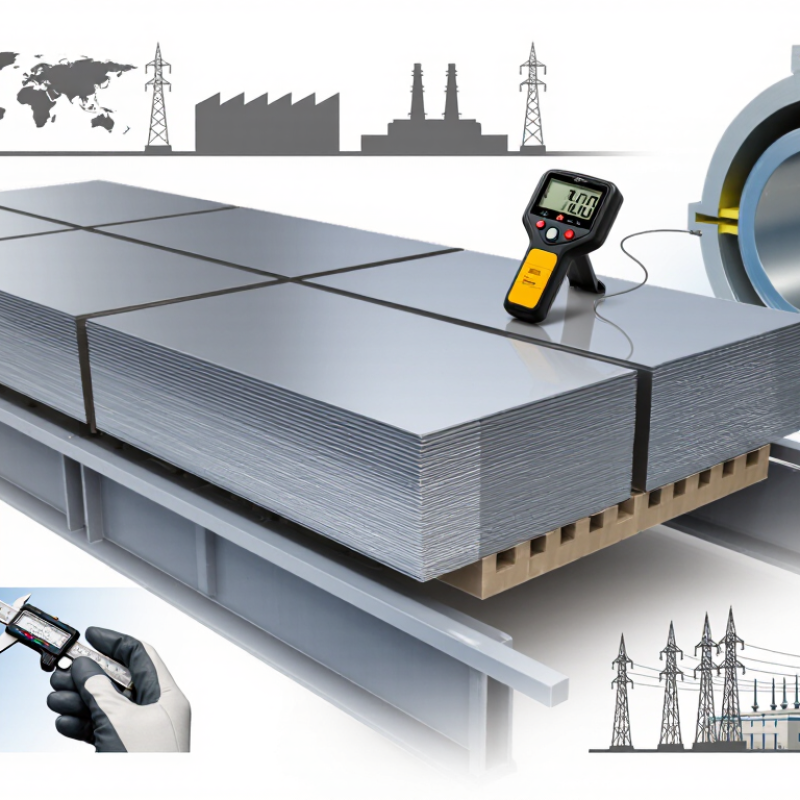
Top Oriented Silicon Steel Strip Manufacturers Worldwide

Defining Grain-Oriented Silicon Steel Strip: 0.23–0.35 mm Grades

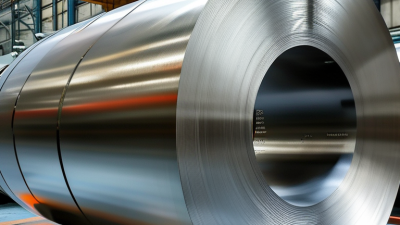
Grain-oriented silicon steel strip is designed for transformer cores, not ordinary structural magnetics. Its crystals favor the rolling direction, creating a strong Goss texture. This reduces hysteresis and eddy-current losses when flux follows that direction. The 0.23–0.35 mm range balances efficiency, punching performance, and production cost. Thinner strip usually lowers eddy-current loss, but it can increase handling difficulty and lamination cost.

The International Energy Agency’s Electricity 2024 report forecasts electricity demand growth of about 3.4% annually through 2026. That expansion increases demand for efficient transformer cores. U.S. Department of Energy rulemaking data estimates stronger distribution-transformer efficiency could save roughly 3.6 quadrillion Btu over 30 years. Core quality matters. Typical 0.23 mm grades may achieve core losses near 0.90–0.95 W/kg at 1.7 T and 50 Hz, depending on grade and testing method. Values must be verified under IEC 60404-8-7 or ASTM A677 conditions. Real factories still face problems. Edge damage, coating variation, and poor cutting alignment can erase laboratory gains. Thinner is not automatically better. Procurement teams should compare guaranteed loss values, permeability, surface insulation, burr limits, and batch traceability rather than thickness alone.

Comparing Core Loss at 1.7 T and 50 Hz: W17/50 in W/kg

When comparing top oriented silicon steel strip manufacturers worldwide, W17/50 offers a useful technical anchor. It records specific core loss at 1.7 tesla and 50 hertz, expressed in watts per kilogram. Lower values usually indicate better magnetic efficiency. Yet the figure is not a complete quality verdict. Grain orientation, strip thickness, insulation coating, and stress relief all influence transformer performance. A laboratory result should be traceable to a recognized method, calibrated equipment, and a defined sampling plan.

Engineers should compare equivalent grades, not attractive numbers from different conditions. Ask whether the sample was tested longitudinally, after cutting, or after final annealing. Cutting can introduce stress and increase loss. Test temperature also matters. A credible supplier should provide batch data, tolerance ranges, test dates, and material certificates. Independent verification through an Epstein frame or single-sheet tester adds confidence. In practical sourcing, W17/50 may vary across coils, even when catalogue data looks stable. That detail is easy to overlook.

Tips: Request W17/50 results at exactly 1.7 T and 50 Hz. Check thickness, coating type, and test direction beside the loss value. Compare several production lots, not one polished sample. Inspect burrs and stacking factor during incoming checks. A lower W17/50 figure can still disappoint if assembly stress is ignored. I would question unusually perfect data; real production needs honest tolerances.

Evaluating Manufacturers by Permeability, Width, Coating, and Capacity

Choosing top oriented Silicon Steel Strip manufacturers worldwide requires more than comparing price lists. Permeability shows how efficiently the material carries magnetic flux. Higher permeability can reduce core losses in transformers and reactors. Yet test results need context. I examine measurement standards, frequency, stress conditions, and batch consistency. Small laboratory gains may disappear during cutting and stacking.

Width is equally practical. Manufacturers should offer stable widths, tight tolerances, and clean edges for automated slitting. A suitable Silicon Steel Strip should match the customer’s core design without excessive trimming. Coating also deserves close attention. Insulation coatings must resist processing heat, maintain surface uniformity, and support reliable lamination. Inspectors often check scratches, pinholes, adhesion, and burr formation under bright plant lighting.

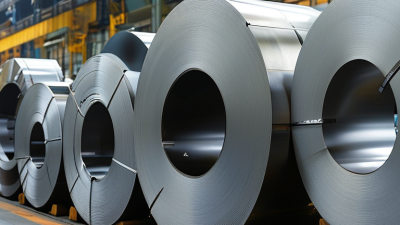
Capacity reveals whether a supplier can support long-term production. Large output matters, but predictable delivery matters more. I look for documented furnace control, coil traceability, inspection records, and realistic lead times. Technical teams should request samples from several production lots. One sample can look excellent. It may not represent routine performance. No ranking is perfect. A manufacturer with impressive capacity may still struggle with narrow widths or specialized coatings. Buyers should compare permeability curves, width ranges, coating options, and annual capacity against the actual application, not a marketing headline.

Asia’s Major Producers: Nippon Steel, JFE, POSCO, and Baosteel

Asia’s major oriented silicon steel producers benefit from a dense regional supply chain. The World Steel Association reported about 1.89 billion tonnes of crude steel production worldwide in 2023. Asia contributed roughly 72% of that volume. This scale supports advanced melting, continuous casting, annealing, and coating operations for transformer-grade strip. However, crude steel capacity does not equal electrical steel capability.

Grain-oriented silicon steel usually contains about 3% silicon. Its magnetic performance depends on crystal alignment, surface insulation, and tight thickness control. Commercial grades commonly use 0.23 to 0.30 millimetre gauges. Under IEC 60404-8-7 testing, buyers examine core loss, magnetic polarization, and permeability. Slit Silicon Steel Strip also requires clean edges. A rough slit edge can create burrs, weaken insulation, and complicate stacking inside a transformer core.

Regional producers increasingly serve grid upgrades and high-efficiency transformer projects. The International Energy Agency’s Electricity 2024 report expects global electricity demand to grow by about 4% annually through 2026. That outlook supports demand for low-loss electrical steel. Yet the market data deserves caution. Public reports often combine grain-oriented and non-oriented products, making direct capacity comparisons imperfect. Actual purchasing decisions still depend on tested losses, coating quality, delivery consistency, and technical support. Small differences matter. Density changes can appear during cutting, winding, and final core assembly.

European and American Suppliers: thyssenkrupp and Cleveland-Cliffs

European and American suppliers play a major role in the global oriented silicon steel strip market. European mills often emphasize strict process control, energy efficiency, and detailed technical documentation. American producers commonly support large transformer projects with dependable domestic logistics and high-volume supply. Both regions serve power transformer, distribution transformer, and reactor manufacturers.

Grade selection requires more than comparing price. Buyers should review core loss, magnetic induction, strip thickness, width tolerance, and surface insulation quality. A stable coating reduces interlaminar current and supports efficient core assembly. Suppliers should also provide test certificates, batch traceability, and clear annealing guidance. Details decide.

In practical sourcing, slitting performance deserves close attention. Poor edge quality can create burrs, stacking gaps, and unnecessary material waste. European production may suit buyers seeking tightly documented specifications and consistent customization. American production may offer advantages when delivery distance, project scale, and regional service are important. These differences are useful, but not absolute.

A reliable evaluation should include sample testing under actual operating conditions. Laboratory values can change after cutting, stacking, and pressing. That part is sometimes underestimated. Buyers should inspect packing protection, moisture control, and coil handling records before approving regular orders. No supplier is perfect; even a strong mill may experience occasional width variation or delayed capacity. Continuous communication and independent verification remain necessary for dependable procurement.

Laser Scribing and Domain Refinement for Lower Core Loss

Top Oriented Silicon Steel Strip Manufacturers Worldwide

Laser Scribing and Domain Refinement for Lower Core Loss

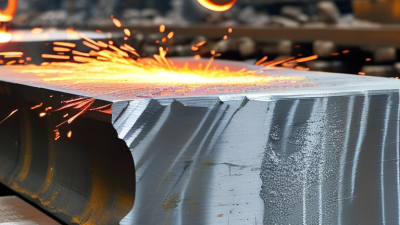
Grain-oriented silicon steel supports efficient transformer cores and compact magnetic assemblies. Its performance depends on crystal alignment, surface insulation, and controlled domain behavior. Leading manufacturers worldwide now use laser scribing to refine magnetic domains after rolling and coating. The process creates narrow, carefully spaced tracks across the strip surface. These tracks divide wide magnetic domains into smaller regions. Smaller domains can reduce hysteresis loss during alternating magnetization. The improvement is measurable.

Laser power, pulse width, scanning speed, and line spacing require close control. Excessive energy may damage the insulation coating or create rough tracks. Insufficient energy may produce weak domain refinement. Experienced production teams inspect the scribed surface through microscopy and electrical testing. They also compare core loss at specified flux density and frequency. Slitted Silicon Steel Strip needs additional care because cutting can introduce edge stress and burrs.

Real production rarely behaves perfectly. Coil tension, local temperature, and coating variation can change the final result. A setting that works on one thickness may fail on another. This is where reliable manufacturers use trial coils, statistical records, and repeat testing. I would not judge quality from a low core-loss figure alone. The result should remain stable after slitting, stacking, and stress-relief treatment. Operators should also check corner joints, clamping pressure, and audible vibration during testing. Small defects often reveal larger process weaknesses.

Transformer Applications from 110 kV to 400 kV and Supply Trends

High Grade Oriented Silicon Steel Silicon Steel Sheets are central to transformers serving 110 kV to 400 kV networks. Their low core loss helps reduce heat during continuous operation. Strong magnetic orientation also supports compact cores and improved efficiency.

The International Energy Agency’s Electricity Grids and Secure Energy Transitions report estimates that annual grid investment must exceed 600 billion dollars by 2030. This expansion will increase demand for reliable transformer materials. At 110 kV, manufacturers often prioritize stable loss performance and mechanical consistency. At 220 kV and 400 kV, core quality becomes more demanding because insulation systems, noise control, and efficiency margins interact.

Supply is tightening in several regions. The U.S. Department of Energy’s 2024 transformer supply-chain review identified extended procurement times and limited production capacity for large power transformers. Steel availability is only one factor. Rolling precision, domain refinement, coating quality, and slitting accuracy can affect final core performance. Small defects matter.

Not every premium sheet delivers equal field results. That deserves more testing. Temperature, joint design, stacking pressure, and operator practice may change measured losses. Regional suppliers are therefore increasing qualification trials, traceability records, and sample testing before approving material for high-voltage projects. Scrap rates and energy costs may also influence future pricing more than expected.

Top Oriented Silicon Steel Strip Manufacturers Worldwide - Transformer Applications from 110 kV to 400 kV and Supply Trends
Transformer Voltage Class Typical Application Common Transformer Rating Range Typical GO Steel Thickness Typical Design Flux Density Indicative Specific Core-Loss Range Preferred Supply Form Current Supply Trend
110 kV Subtransmission transformers, regional grid substations, renewable-energy collector substations, and industrial power supply. Approximately 10–180 MVA, depending on the network and service requirement. 0.23–0.30 mm Approximately 1.60–1.75 T Approximately 0.85–1.25 W/kg at 1.7 T and 50 Hz. Slit coils, cut-to-length laminations, and step-lap core kits. Stable demand; increasing preference for lower-loss grades in urban and renewable applications.
132 kV High-voltage transmission and distribution substations, utility interconnection transformers, and industrial networks. Approximately 31.5–250 MVA. 0.23–0.27 mm Approximately 1.65–1.78 T Approximately 0.80–1.15 W/kg at 1.7 T and 50 Hz. Narrow slit strip for wound or stacked cores; burr-controlled edges are commonly specified. Moderate growth, with procurement focused on consistent magnetic properties and dimensional tolerances.
220 kV Bulk-power transmission substations, interregional grid connections, and large industrial or utility transformers. Approximately 120–400 MVA. 0.23–0.27 mm Approximately 1.65–1.80 T Approximately 0.78–1.10 W/kg at 1.7 T and 50 Hz. High-quality slit coils and precision cut-to-length laminations for large step-lap cores. Strong demand for thin, low-loss material; qualification cycles are longer because reliability requirements are higher.
275 kV High-capacity transmission networks, long-distance power transfer, and major grid reinforcement projects. Approximately 180–500 MVA. 0.23–0.27 mm Approximately 1.65–1.80 T Approximately 0.78–1.08 W/kg at 1.7 T and 50 Hz. Low-loss grain-oriented strip with tight thickness, width, flatness, and insulation-coating control. Supply is more specification-driven; energy-efficiency regulations are supporting demand for premium grades.
330 kV Extra-high-voltage transmission corridors, large interconnection substations, and high-capacity generation evacuation. Approximately 240–630 MVA. 0.23–0.27 mm Approximately 1.60–1.78 T Approximately 0.78–1.10 W/kg at 1.7 T and 50 Hz. Precision slit strip and engineered core packages with controlled lamination geometry. Demand is concentrated in large grid projects; delivery reliability and material traceability are key purchasing factors.
400 kV Extra-high-voltage backbone grids, long-distance transmission, cross-border interconnections, and large power-generation hubs. Approximately 300–1,000 MVA, subject to system design and transformer bank configuration. 0.23–0.27 mm; 0.30 mm may be used where design economics permit. Approximately 1.60–1.75 T Approximately 0.78–1.12 W/kg at 1.7 T and 50 Hz. Premium low-loss strip, precision cut cores, and step-lap assemblies with strict burr and coating controls. Long-term growth linked to grid expansion, renewable integration, and replacement of aging transmission assets.
All Classes Common technical requirements for high-performance transformer cores. Application-dependent. Typical commercial range: 0.20–0.35 mm; thinner gauges generally reduce core loss but may increase material and processing cost. Normally selected below the material saturation region to balance loss, noise, inrush behavior, and core size. Values depend on grade, thickness, test frequency, magnetic induction, stress relief, and cutting quality. Coils, slit coils, cut-to-length laminations, wound cores, and step-lap core sets. Overall trend toward thinner gauges, lower guaranteed losses, improved coating insulation, tighter dimensional control, and greater supply-chain resilience.
The figures shown are indicative engineering ranges for non-oriented company-specific comparison. Actual transformer specifications vary with system studies, cooling method, impedance, noise limits, insulation design, core construction, operating frequency, and applicable procurement standards.
Measurement reference: specific core loss is commonly compared at 1.7 T and 50 Hz for grain-oriented electrical steel; project documentation should use the supplier’s certified test values and the applicable regional standard.

High Magnetic Induction Grain-Oriented Silicon Steel (HiB) in China: Supplier Guide Based on World Steel Association Data

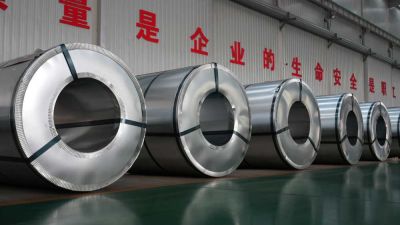
High-magnetic-induction grain-oriented silicon steel (Hi-B) is a premium cold-rolled electrical steel used in modern power equipment. In China, suppliers serving this market typically provide material for ultra-high-voltage and extra-high-voltage transformers, large power transformers, renewable-energy facilities, and rail transit traction converters. Its key advantages include high magnetic induction, ultra-low core loss, low excitation power, and reduced operating noise, helping equipment achieve greater efficiency and stable long-term performance.

When evaluating a Hi-B supplier, buyers should consider manufacturing capability, product consistency, technical support, and quality-control procedures. A reliable factory should offer accurately controlled thickness, magnetic performance, surface insulation, and cutting quality, supported by standardized testing and traceable production records. Stable supply capacity and flexible processing are also important for transformer manufacturers managing demanding project schedules.

China-based Hi-B producers are increasingly focused on energy-saving power systems and the development of new-generation grids. Properly selected material can help reduce transmission losses, lower transformer weight and operating noise, and support dependable service in demanding applications. Supplier evaluation should therefore combine performance requirements, production reliability, inspection documentation, delivery capability, and compatibility with the customer’s equipment design.

FAQS

What does W17/50 measure in electrical steel?

W17/50 measures specific core loss at 1.7 tesla and 50 hertz. It is expressed in watts per kilogram. Lower values usually indicate better magnetic efficiency. Not always.

Can W17/50 alone determine material quality?

No. Grain orientation, thickness, coating, and stress relief also affect performance. A low laboratory value may disappoint after cutting or stacking. The number needs context.

How should W17/50 results be compared?

Compare equivalent grades under identical test conditions. Check thickness, coating type, test direction, temperature, and annealing history. Do not compare attractive numbers from different conditions.

Why can cutting increase core loss?

Cutting may create edge stress and burrs along the strip. These defects disturb magnetic behavior near the edges. Slitting requires careful inspection. Small burrs matter.

What information should a supplier provide?

Request batch results, tolerance ranges, test dates, and material certificates. Ask for results measured at exactly 1.7 tesla and 50 hertz. One polished sample is not enough.

How can test results be independently checked?

An Epstein frame or single-sheet tester can provide additional confidence. The equipment should be calibrated, and the method should be traceable. Sampling must be clearly defined. Otherwise, uncertainty remains.

How does laser scribing reduce core loss?

Laser scribing creates narrow tracks across the strip surface. These tracks divide large magnetic domains into smaller regions. Smaller domains can reduce hysteresis loss during alternating magnetization. The improvement must be measured.

What controls are important during laser scribing?

Operators must control laser power, pulse width, scanning speed, and line spacing. Excessive energy can damage insulation or create rough tracks. Insufficient energy may provide weak refinement. Settings are not universal.

What production factors can change the final magnetic result?

Coil tension, local temperature, coating variation, and strip thickness can change performance. Results may also shift after slitting, stacking, or stress-relief treatment. A successful trial coil proves little. Repeat testing is wiser.

What should incoming inspection include?

Inspect burrs, stacking factor, corner joints, and clamping pressure. During testing, listen for unusual vibration or noise. These details can reveal hidden process weaknesses. I would still question unusually perfect data.

Conclusion

Oriented Silicon Steel Strip is a specialized electrical steel used to improve the efficiency of transformer cores. Common grades range from 0.23 to 0.35 mm in thickness, with performance often evaluated by core loss at 1.7 tesla and 50 Hz, expressed as W17/50 in watts per kilogram. When comparing manufacturers, buyers typically consider magnetic permeability, strip width, insulation coating quality, production capacity, dimensional consistency, and delivery reliability.

Advanced production methods, including laser scribing and domain refinement, can reduce core loss and support more efficient transformer designs. The material is widely used in power transformers serving voltage levels from 110 kV to 400 kV, where low energy loss and stable magnetic performance are essential. Global supply trends increasingly emphasize thinner gauges, improved coatings, higher manufacturing precision, and dependable large-scale production to meet growing demand for efficient power transmission infrastructure.
Isabelle

Isabelle

Isabelle is a dedicated marketing professional at Tangshan Shouyu Electromagnetic New Materials Co., Ltd., a high-tech enterprise established in 2022 in the Yutian County Industrial Park of Tangshan City, Hebei Province. With a profound expertise in the industry, she plays a pivotal role in......
Previous How to Choose the Right Silicon Steel Wire Supplier