Honestly, most steelmakers don’t give Ferro Silico Manganese much thought—until the chemistry starts to shift.
This alloy does some quiet but important work: it supports strength, deoxidation, and steady furnace performance. It’s a mix of manganese, silicon, iron, and a controlled amount of carbon. Tiny changes in chemistry? They can ripple into slag behavior, recovery rates, and the quality of the final steel.
Scale matters here, too. The World Steel Association reported 1.89 billion tonnes of crude steel production in 2024. That’s a lot of steel—and it explains why dependable manganese alloys stay in demand. The U.S. Geological Survey’s Mineral Commodity Summaries 2024 estimated global manganese ore production at about 20 million metric tonnes in 2023. Supply is still concentrated, and that’s not a small detail.
Dr. Mohan Yellishetty, a resource-engineering researcher, has described manganese as “an essential input for modern steelmaking.” Sounds simple enough, right? Procurement, though, is anything but simple. Buyers have to compare assay certificates, sizing consistency, carbon limits, packaging, loading capacity, port access—the works. Producers such as Eramet, OM Holdings, and Ningxia Tianyuan Manganese Industry operate within a competitive international supply network. Their commercial suitability can vary by destination, contract size, and quality specification. Ferro Manganese And Silico Manganese are related products, but they’re not interchangeable in every furnace recipe. That distinction matters.
A practical supplier review shouldn’t stop at the quoted price. You’d also want to verify laboratory results, production continuity, shipment records, and responsible sourcing policies. Moisture in a bulk bag isn’t some theoretical detail—it changes payable weight and handling conditions. And the best supplier may not be the largest producer. No ranking can ever be perfect. Public data is uneven, and buyer requirements differ. So this guide compares leading Ferro Silico Manganese suppliers through evidence, operating scale, product discipline, and export reliability.
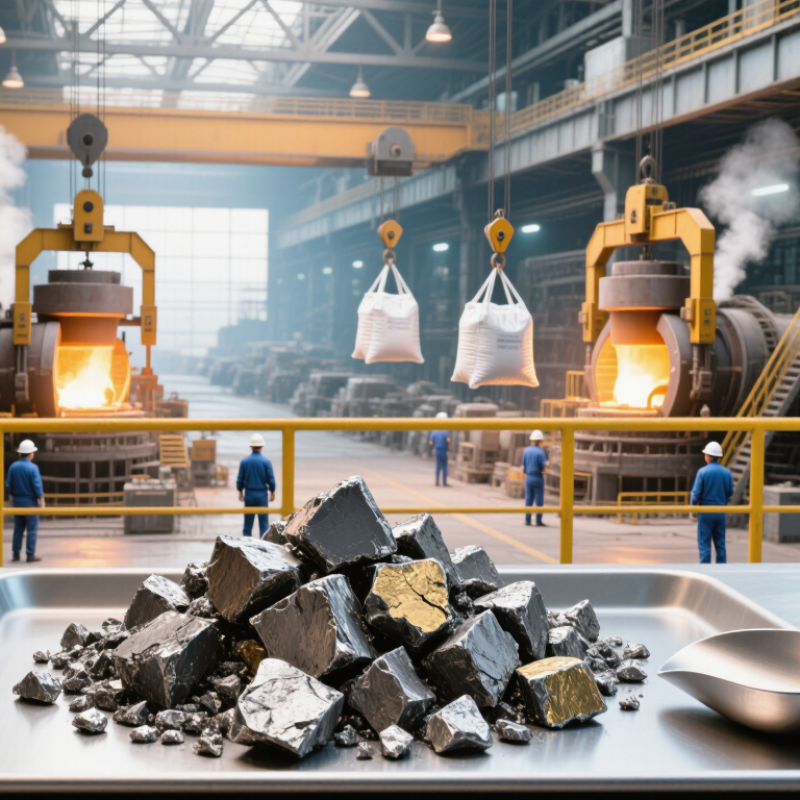
Ferro Silico Manganese is an alloy used in steelmaking to improve composition and production control. It mainly contains manganese, silicon, and iron. In a furnace, manganese supports hardness and strength. Silicon helps remove unwanted oxygen from molten steel. This combination can create cleaner, more consistent steel when carefully dosed.
Global buyers use Ferro Silico Manganese for construction steel, rails, machinery parts, and automotive components. Its value depends on more than chemical percentages. Particle size, packaging quality, moisture control, and delivery stability also matter. A reliable supplier should provide recent test reports, traceable batches, and clear loading records. Buyers should also confirm the material’s origin and production method. Small differences can affect furnace performance.
Tips: Compare manganese and silicon levels, but inspect impurities too. Ask for independent laboratory testing when the order is large. Check whether bags are sealed and protected from rain. Store the alloy on a dry floor. A wet shipment may seem like a minor issue, yet it can increase handling losses and complicate charging. Specifications are helpful, but they are not the whole decision. In practice, even experienced teams sometimes focus too much on price and overlook consistency. That choice can create higher costs later.
Ferro silico manganese is a manganese–silicon ferroalloy mainly used in steelmaking as a deoxidizer and alloying additive. The chart presents representative midpoint values from common commercial specifications: manganese is typically about 65–70% and silicon about 15–20% by mass, while carbon, phosphorus, and sulfur are controlled as impurities. The remaining share is primarily iron, and exact limits vary by grade, standard, and buyer requirements.
For global buyers, quality starts with chemistry, not a polished supplier profile. Commercial ferro silico manganese commonly contains 65–70% manganese, 16–20% silicon, and up to about 2% carbon. Phosphorus and sulfur should remain low, because both can weaken steel performance. Exact limits vary by grade and furnace practice. World Steel Association data records 1.892 billion tonnes of crude steel production in 2023, showing why consistent alloy inputs matter. Still, tonnage alone proves little.
Physical checks deserve equal attention. Ask for sieve analysis, not only a stated size such as 10–50 mm. Excessive fines can create handling losses and uneven furnace charging. Inspect moisture, surface oxidation, breakage, and packaging condition when containers arrive. A dry, clean sample should represent the full lot. ISO sampling principles support representative sampling, yet sampling errors remain common in real purchasing. This is where many assessments become imperfect.
Tips: Compare the certificate with an independent laboratory result. Test Mn, Si, C, P, S, moisture, and particle size. Record the lot number and retain sealed samples. Suppliers should explain their Ferro Silico Manganese Uses, furnace source, test method, and rejection policy. Buyers should also question unusually attractive chemistry claims; one missing decimal can change the commercial value. Geological and market context from the USGS Mineral Commodity Summaries can support supply-risk reviews, but it cannot replace lot-level testing.
Top Ferro Silico Manganese Suppliers for Global Buyers
China and India remain major ferro silico manganese producing regions, supported by large steel industries and established export networks. China offers extensive furnace capacity, while India benefits from manganese ore access, growing production, and improving port infrastructure. South Africa supplies important volumes, supported by rich mineral resources and established mining expertise. Malaysia has expanded its role through competitive power costs and export-oriented alloy plants. Kazakhstan and other regional producers also serve nearby steel markets.
Tips: Compare origin, furnace capacity, ore quality, and delivery history. Ask for recent test certificates before approving shipments. Check manganese, silicon, carbon, and phosphorus levels carefully. Port distance matters. It can change the final cost sharply.
Regional advantages do not guarantee stable supply. Power shortages, rail delays, weather, and changing freight rates can affect delivery schedules. Experienced buyers often divide orders between two regions. This reduces exposure to one market’s disruption, although it may increase inspection work. For Silico Manganese Steel production, consistent alloy chemistry is more valuable than a low initial quotation. A cheaper cargo can create higher refining costs later. Buyers should also review packaging, moisture protection, loading photos, and dispute procedures. No sourcing map is perfect; even reliable suppliers may face sudden operational pressure.
| Major Producing Region | Representative Producing Countries | Role in International Supply | Raw-Material and Energy Position | Typical Export Market Orientation | Common Buyer Advantages | Key Procurement Considerations |
|---|---|---|---|---|---|---|
| East Asia | China | The largest and most diversified production base, with substantial domestic consumption by the steel industry and regular participation in regional export trade. | Strong alloy-processing infrastructure and access to manganese ore imports; production economics are sensitive to electricity prices, environmental controls, and domestic policy. | East and Southeast Asia, the Middle East, and selected international markets depending on freight and domestic demand. | Large production scale, multiple grade options, established container and bulk-shipping services, and broad testing capability. | Confirm export availability, production-origin documentation, inspection procedures, port terms, and consistency of manganese, silicon, carbon, phosphorus, and sulfur levels. |
| South Asia | India | A major ferroalloy manufacturing region serving domestic integrated steelmakers and overseas buyers, especially in Asia, Europe, and the Middle East. | Benefits from domestic manganese resources, established electric-furnace capacity, and a developed alloy-trading sector; power availability varies by state and season. | Asia-Pacific, the Middle East, Europe, and other destinations reached through western and eastern Indian ports. | Competitive export pricing, regular bulk shipments, flexible packing formats, and experience with steel-industry specifications. | Review power-related surcharges, port selection, monsoon-season logistics, moisture control, and independent pre-shipment inspection requirements. |
| Southern Africa | South Africa | One of the most important global regions for manganese ore and ferroalloy production, with a strong role in supplying international steelmaking markets. | Extensive manganese ore resources and established smelting expertise; electricity reliability, rail availability, and port logistics can materially affect supply. | Europe, Asia, the Middle East, and other markets served through southern African bulk-export routes. | Integrated access to manganese feedstock, export-scale logistics, and suitability for large-volume procurement programs. | Assess rail and port schedules, power-related production risk, shipment lead time, ore-quality variability, and force-majeure provisions. |
| Eastern Europe | Ukraine | A historically significant ferroalloy and manganese-producing region with technical expertise and established links to European steel markets. | Local manganese resources and legacy smelting capacity support production, while infrastructure access and operating conditions may affect continuity. | Primarily European and nearby markets when transport corridors and operating conditions permit. | Geographic proximity to European consumers, established metallurgical know-how, and potential for shorter regional transit times. | Verify current operating status, logistics routes, insurance, sanctions screening, payment terms, and contingency arrangements before contracting. |
| Central Asia | Kazakhstan | A regional ferroalloy center supplying domestic and nearby Eurasian steel markets, with export potential through rail-linked corridors. | Access to mineral resources, established ferroalloy plants, and industrial power generation; landlocked geography increases dependence on rail and multimodal transport. | Central Asia, Russia-linked markets, China, and other Eurasian destinations subject to route availability and trade requirements. | Competitive regional freight for rail-connected buyers and suitability for recurring industrial supply contracts. | Calculate delivered cost carefully, including rail transshipment, border procedures, wagon availability, customs documentation, and sanctions compliance. |
| Nordic Europe | Norway | A specialized European producer focused on technically consistent ferroalloys and supply to European stainless-steel and carbon-steel industries. | Strong access to low-carbon hydropower and advanced electric-furnace technology; manganese ore is largely sourced through international supply chains. | European markets and selected overseas customers requiring stable specifications and documented production practices. | High process control, reliable quality documentation, advanced environmental reporting, and comparatively efficient European delivery. | Compare premium pricing with carbon-footprint requirements, European compliance needs, delivery schedules, and minimum order quantities. |
| Southeast Asia | Malaysia | An expanding regional ferroalloy manufacturing and export location serving Asian steelmakers and international traders. | Uses imported manganese ore and regional logistics advantages; production competitiveness is closely linked to industrial power costs and port efficiency. | China, Southeast Asia, South Asia, and other destinations with efficient ocean connections. | Strategic location near major Asian shipping routes, modern industrial zones, and convenient access to regional customers. | Check feedstock origin, furnace capacity, export documentation, port congestion, packing standards, and consistency across shipment lots. |
| Caucasus and Black Sea | Georgia | A recognized regional ferroalloy production base with access to Black Sea shipping routes and nearby Eurasian markets. | Hydropower resources support electric-furnace production, while manganese ore and other inputs may be sourced domestically or internationally. | Turkey, Europe, the Black Sea region, and selected Mediterranean destinations. | Useful geographic position for regional buyers, competitive maritime access, and established ferroalloy operating experience. | Evaluate Black Sea shipping conditions, transshipment requirements, power availability, customs procedures, and geopolitical logistics risk. |
| Buyer note: Ferro silico manganese is commonly purchased in bulk or big bags for steelmaking. Commercial specifications frequently target approximately 60–70% manganese and 14–18% silicon, while carbon, phosphorus, sulfur, size distribution, moisture, and trace elements must be agreed in the purchase contract. Actual availability, pricing, and lead time vary with electricity costs, manganese ore prices, freight conditions, environmental controls, and regional operating status. | ||||||
Global buyers should evaluate ferro silico manganese suppliers beyond headline pricing. This alloy supports steel deoxidation and manganese adjustment. The World Steel Association reported 1.882 billion tonnes of crude steel production in 2024. That scale makes stable alloy supply commercially important. The USGS Mineral Commodity Summaries 2025 estimated global manganese mine production at about 20 million metric tons of contained manganese in 2024. These figures do not prove a supplier’s reliability.
Request recent certificates of analysis for several production lots, not one polished sample. Check manganese, silicon, carbon, phosphorus, sulfur, size distribution, and moisture. Values should match the agreed specification and the receiving mill’s process needs. Independent laboratory testing can confirm unusual results. It costs less than correcting an unstable furnace charge.
Ask for batch numbers, production dates, and traceability records. A supplier should explain its sampling method clearly. ISO 9001 certification helps, but it is not proof of consistent alloy quality.
Review loading photographs, packaging strength, and container seals before shipment. Confirm inspection rights and claims procedures in the contract. Also examine production capacity, port access, lead times, and backup logistics.
A low quote can still be a warning. I would compare at least three qualified suppliers using the same specification sheet.
No checklist is perfect. Seasonal power shortages, ore changes, and port delays can still disrupt delivery. A transparent supplier admits these risks and offers practical mitigation plans.
Production discipline matters more than a polished quotation. World Steel Association data recorded about 1.89 billion tonnes of crude steel production in 2023. That scale makes consistent ferroalloy chemistry essential. High Carbon Silico Manganese should arrive with declared manganese, silicon, carbon, phosphorus, and sulfur levels. Buyers should also confirm size distribution, moisture, and visible contamination.
Reliable suppliers normally sample each production lot under ISO 4551 principles. Laboratories may use combustion-infrared testing for carbon and spectrometric methods for manganese and silicon. Sieve analysis then checks whether particles match the agreed range, such as 10–50 mm. USGS Mineral Commodity Summaries 2024 estimated global manganese mine output near 20 million metric tons in 2023. This figure shows why ore origin and furnace control deserve careful review.
A useful quality file includes a certificate of analysis, lot number, production date, sampling method, test results, packing details, and safety data sheet. Traceability should connect the sealed bag to a furnace batch. Independent testing can verify disputed shipments, especially phosphorus and sulfur results. Paperwork is not proof by itself. One weakness remains: sampling errors can hide segregation inside a container. Buyers should retain sealed counter-samples and define acceptance limits before loading. Clear records reduce arguments, but they cannot repair poor sampling.
Buying ferro silico manganese requires more than comparing the lowest offer. I have seen prices change after suppliers confirmed manganese content, silicon percentage, carbon limits, and impurity levels. Raw material costs, electricity, furnace efficiency, and production capacity also affect the quotation. A reliable buyer requests recent laboratory reports, production dates, and independent inspection options. Small specification changes can create large price differences.
Trade terms need careful attention. Under FOB, the buyer usually manages ocean freight and marine insurance after loading. CIF includes freight and insurance to the named destination port, but destination charges may remain unpaid. Confirm the exact Incoterm, transfer point, payment schedule, and document requirements. Letters of credit can reduce payment risk, although wording mistakes may delay release. Check whether the price covers export clearance, inspection, pallets, and port handling.
Shipping details often decide the real landed cost. Bulk shipments may reduce packaging expenses, while one-ton bags offer cleaner handling at smaller facilities. Ask about moisture protection, container loading photos, gross weight, and stowage conditions. Port congestion can create demurrage costs. Weather can damage poorly sealed bags. I once underestimated inland transport, and the savings disappeared. Buyers should compare delivered cost, not only the furnace-gate price, while verifying customs rules and lawful import documentation for every destination.
It is an alloy for steelmaking. Manganese supports strength and hardness, while silicon helps remove oxygen from molten steel.
It supports construction steel, rails, machinery parts, and vehicle components. The right dosage improves consistency during furnace production.
Check manganese, silicon, carbon, phosphorus, and sulfur levels. Impurities matter too. A small difference can affect furnace performance.
Particle size affects furnace charging and melting behavior. Moisture can increase handling losses. Wet material complicates storage and charging.
Use sealed bags protected from rain. Store them on a dry floor. Damp packaging deserves immediate attention.
Request a certificate of analysis, lot number, production date, sampling method, test results, packing details, and safety data sheet.
Suppliers should sample every production lot. Laboratories can test carbon, manganese, and silicon with recognized analytical methods.
Keep sealed counter-samples and define acceptance limits before loading. Independent testing can clarify phosphorus and sulfur differences.
No. Compare chemistry, particle size, moisture, packaging, traceability, and delivery stability. Price alone may create higher costs later.
Sampling errors may hide segregation inside a container. Records help, but they cannot repair poor sampling. That risk deserves honest review.
Ferro Silico Manganese is a vital alloy used in steelmaking to improve strength, hardness, deoxidation, and overall product performance. Global buyers assess it through key chemical and physical specifications, including manganese and silicon content, carbon and phosphorus levels, particle size, moisture, consistency, and appearance. Major producing regions contribute differently to international supply based on ore availability, energy costs, processing capacity, infrastructure, and export experience.
Selecting reliable Ferro Silico Manganese suppliers requires careful review of production standards, independent testing procedures, quality certificates, batch traceability, and technical documentation. Buyers should also compare pricing according to raw material costs, energy prices, order volume, market conditions, and delivery schedules. Clear trade terms, suitable packaging, port capabilities, shipping routes, insurance, and customs documentation are equally important. A structured evaluation process helps international purchasers reduce supply risks, maintain stable steel production, and establish dependable long-term sourcing arrangements.