• sns01
  • sns02
  • sns03-1
  • sns04
Leave Your Message
0%

When global buyers are choosing the right oriented silicon steel, it’s important to look beyond just the grade names or those tempting price tags. Things like core loss, magnetic induction, thickness, coating quality, surface finish, and how well it cuts can all impact the efficiency of a transformer. Even a tiny difference on a test sheet might seem negligible, but across thousands of kilos, it can really add up.

Dr. Giorgio Bertotti, a well-respected expert in magnetic materials, once said, “Magnetic losses come from irreversible processes.” That’s still a pretty handy way of understanding things. It links what you see in lab tests to the heat, noise, and wasted energy you’d find inside an operational transformer. So, as a buyer, it’s smart to ask for certified test reports, detailed manufacturing info, and clear tolerance ranges. Sure, experience with a supplier counts, but solid documentation? That's what really counts.

This guide will walk you through the Top 10 types of oriented silicon steel that global buyers should know about. We’re comparing traditional grades, high-permeability options, laser-scribed materials, and other high-performance choices. You might come across terms like High Grade Oriented Silicon Steel Sheets in listings, but don’t just take it at face value — make sure to double-check what it actually means. Marketing talk can sometimes be pretty blurry.

Real-world purchasing isn’t always perfect — a higher-grade material might cut losses but come with higher costs, more delicate handling, or even delays. Buying from a supplier you know doesn’t guarantee consistent quality with every batch. So, it’s a good idea to question assumptions, compare samples, and test under the actual conditions in which the transformer will run. Little things matter — a rough edge can mess with stacking, and a coating flaw might boost losses.

At the end of the day, it’s not about picking one “best” material for everything. Instead, it’s about finding the right fit for each specific transformer design, manufacturing process, and efficiency goal.
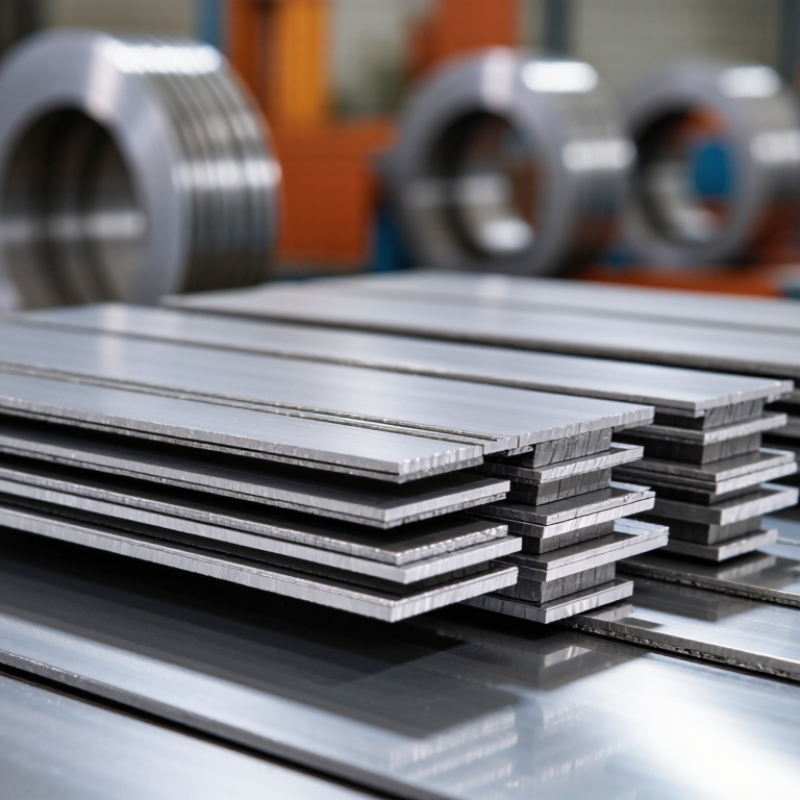
Top 10 Types of Oriented Silicon Steel for Global Buyers

Oriented Silicon Steel: 2.0–3.5% Silicon, Goss Texture, and EN 10106

Oriented Silicon Steel Sheet typically contains about 2.0–3.5% silicon, with many grades near 3%. Silicon raises electrical resistivity and helps reduce eddy-current losses. The steel is processed to develop a strong Goss texture, aligning its magnetic properties with the rolling direction. That alignment matters: flux travels efficiently along the grain, but less efficiently across it. Handle and stack sheets carefully. Scratches, burrs, and poor cutting can increase losses in a finished transformer core.

Standards need checking. EN 10106 covers fully processed, cold-rolled non-oriented electrical steel; oriented grades are covered by EN 10107. Buyers should compare guaranteed core-loss values at stated induction and frequency, rather than relying on silicon content alone. The International Energy Agency’s 2023 report, Electricity Grids and Secure Energy Transitions, says annual grid investment must exceed USD 600 billion by 2030 in its pathway. That growth raises demand for efficient transformers, but it does not make every grade interchangeable. Grain orientation, coating, thickness, and processing history all affect performance. A datasheet is useful. A tested sample is better. Verify test conditions and tolerances before approving a specification.

How to Classify the Top 10 Grades by Core Loss at 1.7 T and 50 Hz

Classifying the top 10 oriented silicon steel grades by core loss requires one consistent test condition: 1.7 T and 50 Hz. Lower measured loss generally indicates better magnetic efficiency. Rank grades from the lowest declared maximum loss to the highest, using values from comparable product data. A grade listed at 0.90 W/kg, for example, would rank ahead of one at 1.05 W/kg, if both figures use the same test method and thickness.

Do not treat grade names as a universal ranking system. Standards, sheet thickness, coating, and processing can change reported results. Ultra-Thin Oriented Silicon Steel Sheet may offer advantages in some designs, but its figures should not be compared casually with thicker material. Look for guaranteed maximum values, not just typical results. Small differences matter. Yet measurement conditions matter more. In practical sourcing, confirm the test standard and ask whether the data represents finished material; this detail is easy to overlook.

Tips: Build a comparison table with grade, thickness, maximum loss, test standard, and date of the data sheet. Keep the magnetic flux density at 1.7 T and frequency at 50 Hz for every entry. If two grades appear nearly tied, request test reports before deciding. A clean ranking helps, but it is not the whole purchasing decision.

Conventional GO Steel Types: 0.27–0.35 mm Gauges for Power Transformers

Conventional grain-oriented (GO) silicon steel in 0.27–0.35 mm gauges remains a practical choice for many power-transformer cores. The thinner end can reduce lamination-related eddy-current losses, while 0.30 and 0.35 mm sheets may suit designs where cost, availability, and core-building methods matter more. Gauge alone does not predict performance. Grade, rolling direction, coating, and joint design also shape core loss and noise. Small details matter.

IEC 60404-8-7:2017 specifies magnetic properties for fully processed grain-oriented electrical steel sheet and strip. Buyers should compare guaranteed core-loss values at stated flux density and frequency, rather than relying on a grade label alone. Ask suppliers for test conditions and coating details. A data sheet without them is incomplete. In production, burrs or rough handling can damage insulation between laminations, so incoming checks and careful stacking deserve attention.

Demand adds context, but not a simple forecast for GO steel. The International Energy Agency’s 2023 report, Electricity Grids and Secure Energy Transitions, says annual grid investment needs to exceed USD 600 billion by 2030, up from about USD 300 billion today. This points to growing network needs, not a guaranteed transformer order book. Buyers should assess local specifications and delivery risks. And revisit assumptions: a thinner gauge may improve calculated losses, yet complicate handling or raise procurement costs.

High-Permeability GO Grades: B8 Values Above 1.85 T for Efficient Cores

High-permeability grain-oriented electrical steel is valued for strong magnetic induction along its rolling direction. In grade data published across the industry, B8 values above 1.85 tesla are a useful selection benchmark, not a guaranteed result for every coil. B8 means magnetic flux density measured at a field strength of 800 A/m. IEC 60404-3 describes the Epstein-frame method used to assess this property. Small differences in sampling, thickness, and processing can affect measured results.

In a transformer core, higher B8 can help carry the required flux with less steel or a smaller core section. That may reduce material use, but it does not automatically guarantee lower total losses. Buyers should compare B8 with specific total-loss figures, test conditions, coating, and thickness. Ask for certified mill test data for the actual production lot. Numbers matter.

Ordinary Oriented Silicon Steel Sheet may suit less demanding designs, while high-permeability grades are often considered where core efficiency is critical. A practical check is to review the test method and values at the intended operating frequency. This step is easy to overlook. B8 alone cannot describe noise, assembly stress, or finished-core performance, so procurement teams should treat it as one important measure, not the whole decision.

Domain-Refined GO Steel: 10–15% Lower Core Loss Through Laser Scribing

Laser-scribed domain-refined grain-oriented steel can reduce core loss by roughly 10–15% compared with suitable conventional material. The actual gain depends on grade, thickness, coating, and test conditions. It is not a guaranteed figure for every transformer design.

Laser pulses create narrow, controlled regions of strain across the steel sheet. These regions refine magnetic domains, limiting energy lost as the magnetic field repeatedly changes direction. The effect is measurable. Engineers should compare samples using the same frequency, flux density, and measurement method. Small differences in testing can distort the result.

For buyers, the key is confirming that the quoted loss values match the intended operating conditions. Ask for test data and check whether processing, cutting, or stacking may affect performance. Coated Oriented Silicon Steel also needs careful handling; scratches and burrs can complicate assembly and increase local losses. Laser refinement is useful, but it is not magic. A lower-loss sheet may cost more, and savings depend on the finished core and its duty cycle. There is room for judgment here: published figures rarely capture every factory’s real-world variation.

Specialty GO Products: Thin-Gauge 0.20–0.23 mm Steel for High-Frequency Use

For buyers comparing specialty grain-oriented (GO) steel, 0.20–0.23 mm strip offers a practical route to lower eddy-current loss as frequency rises. Thinner laminations interrupt circulating currents within the core. They do not guarantee lower total loss: grade, coating, cutting stress, stacking pressure, and operating flux density all matter. Ask suppliers for loss curves at the intended frequency and induction, not only a 50 Hz headline value. Test conditions should be stated clearly, with measurements aligned to relevant IEC 60404 methods.

High-frequency suitability needs qualification. Conventional GO steel is engineered around strong magnetic alignment and is commonly used in power-frequency transformers; performance can deteriorate when frequency, waveform, or processing differs from the design point. The International Energy Agency’s Electricity Grids and Secure Energy Transitions report says annual grid investment must rise from about USD 300 billion to more than USD 600 billion by 2030. That forecast underscores demand for efficient equipment, but it does not make thin-gauge steel a universal solution. In sample reviews, inspect burr height, coating continuity, and edge damage under magnification. Small defects can undermine a carefully specified core. A useful supplier comparison includes frequency-specific core-loss data, stacking factor, and test uncertainty. The awkward part: thinner strip may raise processing and lamination costs, so validate the finished core—not just the coil certificate.

Top 10 Types of Oriented Silicon Steel for Global Buyers

Specialty GO Products: Thin-Gauge 0.20–0.23 mm Steel for High-Frequency Use

Indicative engineering comparison at 400 Hz and 1.0 T. Lower specific total loss generally indicates better high-frequency efficiency. Actual results depend on grade chemistry, insulation coating, domain refinement, lamination factor, annealing condition, and test method; buyers should confirm values with supplier datasheets.

Global Buyer Criteria: ASTM A876, Coating Quality, Tolerances, and Testing

Global buyers assessing the top ten types of oriented silicon steel should start with ASTM A876. This specification provides a practical baseline for grain-oriented electrical steel, magnetic performance, dimensions, and delivery conditions. Common choices include conventional grain-oriented, high-permeability, and domain-refined grades. The correct type depends on core loss, flux density, and transformer design. Do not select by grade name alone.

Coating quality deserves close inspection. A stable insulation coating reduces eddy-current losses between stacked sheets. Buyers should check coating thickness, surface uniformity, adhesion, and resistance after slitting. A clean, pale surface is useful, but appearance cannot prove electrical performance. Ask for coating test results and review the allowed testing method. Small scratches along sheet edges can become larger problems during assembly.

Tolerances affect stacking accuracy and final core performance. Request limits for thickness, width, flatness, camber, burr height, and edge wave. These details matter during automated cutting. Testing should cover core loss, permeability, thickness, tensile behavior, and dimensional checks. Independent verification is valuable for high-volume orders. A mill certificate alone is not enough.

In practice, buyers sometimes trust certificates too quickly. I have found that sampling plans are often less clear than the material specifications. Clarify lot size, sample location, equipment calibration, and retest rules before approval. Some requirements may still need adjustment after trial assembly. That is not failure; it is useful evidence.

FAQS

What is oriented silicon steel?

It is electrical steel containing about 2.0–3.5% silicon. Many grades contain close to 3%. Its grains develop a strong Goss texture.

Why is silicon added to the steel?

Silicon increases electrical resistivity. This helps reduce eddy-current losses inside transformer cores.

What does the Goss texture do?

It aligns magnetic properties with the rolling direction. Magnetic flux travels efficiently along the grain direction.

Does oriented steel perform equally in every direction?

No. It works better along the rolling direction and less efficiently across it. Design direction matters.

Which standard applies to oriented electrical steel?

EN 10107 covers oriented electrical steel. EN 10106 covers fully processed, cold-rolled non-oriented electrical steel.

How should grades be ranked by core loss?

Compare measured or guaranteed maximum losses at 1.7 T and 50 Hz. Lower loss generally indicates better magnetic efficiency.

Can a 0.90 W/kg grade outrank a 1.05 W/kg grade?

Yes, if both values use the same thickness, test method, induction, and frequency. Otherwise, the comparison may mislead.

What information should appear in a comparison table?

Record grade, thickness, maximum core loss, test standard, and data-sheet date. Keep every test at 1.7 T and 50 Hz.

Why should sheets be handled carefully?

Scratches, burrs, and poor cutting can increase finished-core losses. Stack sheets carefully. Small damage can become expensive.

Is a datasheet enough for purchasing approval?

Not always. Request a tested sample and verify test conditions, tolerances, coating, thickness, and processing history. I might overlook one detail.

Conclusion

Oriented Silicon Steel is a specialized electrical steel designed to guide magnetic flux efficiently in transformer and other high-performance core applications. Typically containing 2.0–3.5% silicon, it develops a Goss texture that improves magnetic performance along the rolling direction and is commonly evaluated under EN 10106 requirements. The top grades can be classified by core loss measured at 1.7 T and 50 Hz, with conventional products generally available in 0.27–0.35 mm gauges for power transformers.

Higher-performance options include high-permeability grades with B8 values above 1.85 T, as well as domain-refined materials that can reduce core loss by approximately 10–15% through laser scribing. Specialty thin-gauge products in the 0.20–0.23 mm range are suitable for applications requiring improved efficiency at higher frequencies. When selecting material, global buyers should review ASTM A876 compliance, coating insulation quality, dimensional tolerances, magnetic test data, surface condition, and consistency between production batches.
Sophia

Sophia

Sophia is a dedicated professional marketing specialist at Tangshan Shouyu Electromagnetic New Materials Co., Ltd., a high-tech enterprise established in 2022. Located in the Yutian County Industrial Park of Tangshan, Hebei Province, the company focuses on the research, development, production, and......
Previous How to Choose Oriented Silicon Steel Strip in 2026?