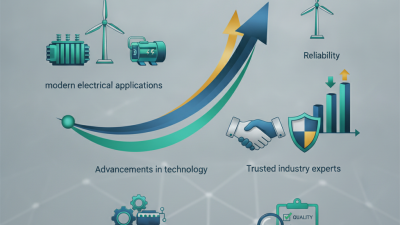
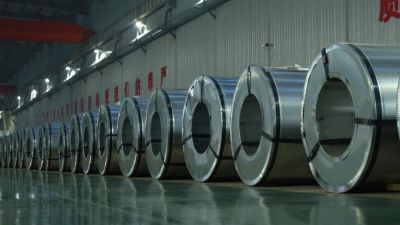
Okay, so picking the right Silicon Steel Wire supplier? It’s not just about who’s offering the lowest price per kilo. This stuff—electrical steel—is what goes into transformer cores, motors, generators, and all sorts of high-frequency parts. And tiny differences in resistivity, coating quality, or magnetic loss don’t stay tiny for long. They show up as heat, noise, or just plain wasted electricity.
The International Energy Agency says global electricity demand is heading into a stretch of sustained growth, pushed by industry, data centers, and electrification. The U.S. Department of Energy also points to motor efficiency as a huge energy-saving opportunity. So suppliers are under more pressure to deliver stable electrical performance—not just a pretty quote. A supplier worth trusting should give you verified grades, dimensional tolerances, coating details, batch traceability, and test results from labs people actually recognize.
As Dr. Martin Keller, an independent electrical-steel materials consultant, puts it: “Consistency is the real specification in electrical steel.” That’s worth sitting with. A sample can look great, but later coils might drift in gauge, insulation resistance, or magnetic properties. And that kind of risk? Easy to underestimate.
So look closely. Ask for recent inspection records—not glossy brochures. Check annealing controls, slitting accuracy, packaging methods, and how they handle corrective actions. See if the supplier actually gets your operating frequency, temperature range, winding tension, and core design. The World Steel Association’s reports show just how big and complicated global steel production is, but scale alone doesn’t guarantee precision. A giant manufacturer can still miss a narrow application requirement. My own rule of thumb is simple: choosing a supplier should be a technical audit, not a purchasing shortcut.
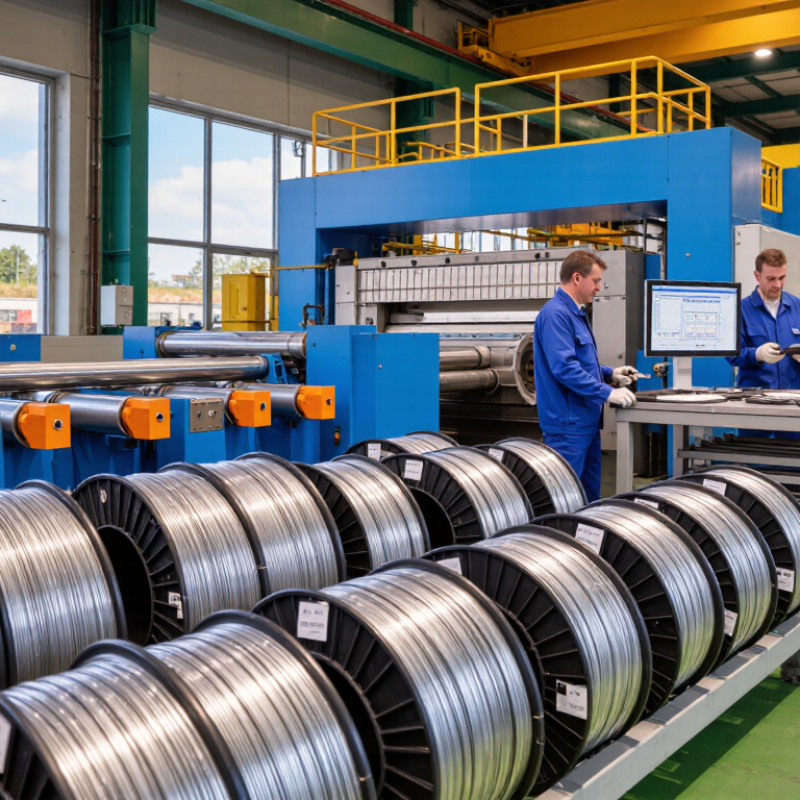
Understanding Silicon Steel Wire and Its Applications
How to Choose the Right Silicon Steel Wire Supplier
Understanding silicon steel wire starts with its magnetic purpose. Silicon steel contains silicon that increases electrical resistivity and reduces eddy-current losses. Engineers use it in specialized magnetic circuits, wound cores, sensors, transformers, motors, and generators. Electrical steel remains important as electrification expands. The International Energy Agency reported more than 17 million electric cars were sold globally in 2024, increasing demand for efficient traction motors (IEA, Global EV Outlook 2025).
Electrical steel remains important as electrification expands.
A reliable supplier should provide measured core loss, magnetic permeability, resistivity, tensile strength, diameter tolerance, and surface condition. Ask for test data from each production batch. Check whether the wire suits high-frequency operation, winding tension, and thermal cycling. The U.S. Department of Energy reports that motor-driven equipment accounts for about 68% of industrial electricity consumption in the United States (DOE, United States Industrial Motor Systems Market Opportunities Assessment). Small efficiency gains can therefore matter across thousands of operating hours.
Specifications can mislead.
A polished certificate is not proof of stable production. Request samples, winding trials, insulation details, and independent verification when the application is sensitive.
Suppliers should explain annealing conditions, coating adhesion, packaging, and traceability. Some buyers focus only on price, then discover brittle wire, inconsistent diameters, or excessive surface damage during assembly. That is an avoidable lesson, although no supplier evaluation is perfect.
A practical review should compare technical evidence, communication speed, corrective-action records, and delivery performance. Reliability is demonstrated over repeated lots, not one successful sample.
Defining Your Technical and Production Requirements
How to Choose the Right Silicon Steel Wire Supplier
Defining Your Technical and Production Requirements
A reliable supplier conversation starts with your actual production conditions, not a generic material request. Define wire diameter, silicon content, tensile strength, electrical resistivity, surface finish, and dimensional tolerance. State the forming method, winding speed, operating temperature, and expected service life. Small gaps can cause large production problems.
Your application may require annealed wire, coated wire, or a specific magnetic response. If you are sourcing Chrome Silicon Wire, clarify whether the term describes the required alloy or only a search keyword. Ask for chemical composition, mechanical test results, and batch-level traceability. Request samples produced under conditions similar to your line. A polished sample can hide practical weaknesses.
Production volume matters just as much as laboratory performance. Share monthly demand, acceptable variation, packaging needs, and delivery windows. The supplier should explain its inspection process and how it handles nonconforming batches. I have found that vague answers often create delays later. A perfect specification is rare. Review it after the first trial, because your equipment may reveal issues that drawings cannot show. Check whether the supplier can maintain stable quality across repeated orders, not just one successful shipment.
Evaluating Supplier Quality and Manufacturing Capabilities
Choosing a silicon steel wire supplier requires more than comparing quotations. Request mill certificates, heat numbers, chemical analysis, tensile results, and magnetic performance data for every batch. A reliable supplier should trace each coil from melting through drawing, annealing, surface treatment, and final inspection. Ask to review calibration records for micrometers, tensile testers, and magnetic testing equipment. Small errors matter. A 0.02 mm diameter variation can affect winding tension, fatigue life, and assembly consistency.
Manufacturing capability should match the wire’s actual application. Confirm drawing-pass control, heat-treatment uniformity, decarburization limits, and packaging protection against rust and deformation. ASTM A401/A401M provides useful requirements for chromium-silicon alloy spring wire, but Chrome Silicon Spring Wire should not be treated as electrical silicon steel. Their chemistry, performance targets, and test methods differ. This distinction is easy to miss.
Independent data supports a stricter review. The International Energy Agency reports that iron and steel production creates roughly 7–9% of global energy-related carbon dioxide emissions. Efficient processing and documented energy controls therefore deserve attention, not just marketing claims. The World Steel Association also emphasizes process consistency and quality management across modern steel production. Ask for recent process capability data, corrective-action records, and sample coils before approval. A polished certificate is not proof. Factory evidence is stronger. One practical weakness remains: suppliers may provide excellent laboratory samples but inconsistent production lots. Require three consecutive batches, independent verification, and clear rejection terms before committing.
Checking Certifications, Testing, and Quality Control
Choosing a silicon steel wire supplier requires more than reviewing a polished certificate. Check whether its ISO 9001 quality system covers incoming steel, drawing, annealing, and final inspection. ISO 14001 can support environmental control, but it does not prove magnetic performance. Ask for current certificates, issuing bodies, scope, and expiry dates. Documents with vague product coverage deserve closer questioning.
Testing should match the material’s actual use. IEC 60404-2 and ASTM A343 provide recognized methods for measuring magnetic properties, including core loss and permeability. Request batch-level results, not only a typical datasheet. A useful report should show gauge, coating condition, test frequency, and Epstein-frame or equivalent results. The IEA Electricity 2024 report forecasts global electricity demand to grow by about 3.4% annually from 2024 through 2026. That pressure makes small efficiency differences commercially important.
Quality control becomes visible on the factory floor. Look for calibrated tensile testers, surface inspection under controlled lighting, and sealed samples retained by heat number. For High Grade Oriented Silicon Steel Silicon Steel Sheets, verify grain orientation, thickness tolerance, burr height, and interlaminar insulation. Ask how nonconforming coils are isolated. This question matters. Some suppliers present excellent averages while hiding unstable batches. I have seen inspection plans that looked complete but skipped edge damage after slitting. A supplier should welcome independent audits and third-party retesting. Certification alone is not enough.
Comparing Pricing, Lead Times, and Supply Capacity
Choosing the right Silicon Steel wire supplier requires more than comparing a price per kilogram. In factory purchasing, the cheapest quotation can hide slitting fees, packaging charges, or costly minimum order quantities. Ask for a line-by-line quotation. Request samples from the same production lot, not an unrelated showroom coil. A clean price is useful. It is not enough.
Lead time should be measured from purchase order approval to delivery at your receiving dock. Ask which steps control the schedule: raw material allocation, annealing, drawing, testing, and export preparation. I have seen a promised twenty-day shipment become six weeks after one inspection failed. Confirm normal and emergency lead times in writing. Also ask how delays are reported. Silence creates more risk than a late email.
Supply capacity needs evidence, not confident language. Review monthly output, available drawing lines, warehouse stock, and capacity reserved for repeat customers. A supplier may handle a trial order but struggle with eight tons every month. Check whether backup equipment and qualified operators exist. Still, capacity figures can be optimistic; I would verify them through production records and a small repeat order. Compare payment terms, defect replacement policies, and freight options beside the unit price. The best decision may cost slightly more, but I would challenge that assumption when volumes change.
Assessing Communication, Service, and Long-Term Reliability
How to Choose the Right Silicon Steel Wire Supplier
A dependable supplier communicates before problems become urgent. During qualification, ask for clear replies on wire diameter, tensile strength, insulation, magnetic properties, and delivery tolerances. Technical answers should include test methods and realistic limits. Vague promises create expensive surprises.
McKinsey’s 2022 supply-chain research reported that 73% of companies had experienced supplier-network problems. That figure makes communication a measurable risk-control tool, not a courtesy. Request a named technical contact, response-time targets, and written change notifications. Service quality also appears in small details: traceable coil labels, readable inspection reports, and prompt replacement plans. Ask how the supplier handles nonconforming wire. A good answer includes containment, root-cause analysis, and corrective action. I would still test this process with a small order. Audits can look perfect. Production reveals more.
Tips: Send the same specification to several suppliers. Compare reply speed, technical depth, and missing information. Ask for sample inspection data, not only certificates. Review at least three months of delivery performance when available. The 2023 World Bank Logistics Performance Index emphasizes reliability and shipment timeliness as key logistics indicators. Use those ideas in your supplier scorecard. Track on-time delivery, complaint closure, engineering response time, and repeat defects. Do not reward the lowest quote alone. A cheaper coil that causes line stoppages is rarely cheaper. Reliability needs evidence.
How to Choose the Right Silicon Steel Wire Supplier
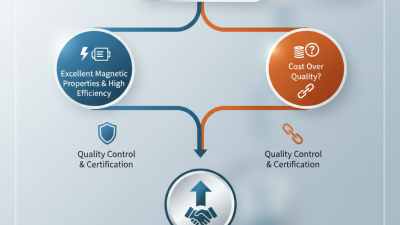
Recommended supplier assessment weights based on practical procurement priorities for silicon steel wire: product consistency, delivery reliability, technical support, communication speed, quality documentation, and long-term service capability.
The weighting helps buyers compare suppliers objectively. Quality consistency and delivery reliability receive the highest emphasis because variations in wire properties, delays, or incomplete documentation can directly affect production continuity.
HiB Electrical Steel Suppliers in China: Transformer Core Trends from IEA & World Steel Association Reports
China’s HiB electrical steel suppliers are responding to major transformer-core trends highlighted in energy and steel-industry reports: expanding electricity networks, renewable-power integration, grid modernization, and rising demand for efficient high-voltage equipment. As utilities seek to reduce transmission losses and improve transformer performance, high magnetic induction grain-oriented silicon steel is becoming increasingly important. Its optimized magnetic properties support smaller, more efficient cores while helping lower operating noise and energy consumption.
HiB high magnetic induction oriented electrical steel is designed for ultra-high-voltage and large-capacity transformers that require superior magnetic induction, reduced iron loss, and stable performance. Typical grades include 23P085, 23P090, 27P095, 30P105, and 35P115, offering options for different core designs and efficiency targets. Chinese manufacturers and factories provide these grades in accordance with relevant industry standards, with production capabilities suited to both domestic grid projects and international supply requirements. As transformer demand grows alongside clean-energy development, reliable HiB material can help equipment manufacturers improve efficiency, manage lifecycle costs, and meet increasingly demanding grid-performance expectations.
FAQS
It supports magnetic circuits in wound cores, sensors, transformers, motors, and generators. Silicon raises electrical resistivity and reduces eddy-current losses. The benefit depends on frequency, design, and processing.
Request core loss, magnetic permeability, resistivity, tensile strength, diameter tolerance, and surface condition. Ask for test results from each production batch. Confirm coating, annealing, and thermal-cycle performance.
Describe diameter, silicon content, tensile strength, surface finish, tolerance, winding speed, temperature, and service life. State monthly volume and packaging needs. Small gaps matter.
A polished sample may hide brittle behavior or surface damage. Test wire under similar winding tension, speed, and temperature. Check breakage, diameter consistency, coating adhesion, and assembly marks.
Request line-by-line pricing for slitting, packaging, minimum quantities, freight, and replacement terms. Compare total delivered cost, not only price per kilogram. Cheap can become expensive.
Measure lead time from order approval to arrival at your receiving dock. Ask about material allocation, annealing, drawing, testing, and shipping preparation. Record normal and emergency timelines. Silence is risky.
Request monthly output, available drawing lines, warehouse stock, and repeat-order capacity. Ask whether backup equipment and trained operators are available. A trial shipment proves little.
Review traceability, inspection methods, corrective-action records, communication, and delivery history. Compare repeated production lots, not one successful sample. No evaluation is perfect. I might trust confident presentations too quickly; production records provide stronger evidence.
Conclusion
Choosing the right Silicon Steel Wire supplier requires more than comparing prices. Start by understanding how the material will be used, including electrical, mechanical, dimensional, and surface requirements. Define your production volume, wire specifications, tolerances, packaging needs, and delivery schedule before contacting potential suppliers. Then evaluate their manufacturing capabilities, equipment, process stability, material traceability, and ability to produce consistent quality at your required scale.
A reliable supplier should provide relevant certifications, inspection records, testing procedures, and clear quality-control standards. Compare quotations carefully by considering total value, lead times, production capacity, inventory flexibility, and the supplier’s ability to handle urgent or changing orders. Communication is equally important: responsive technical support, accurate documentation, transparent updates, and effective problem-solving can reduce production risks. By assessing quality, capacity, service, and long-term reliability together, buyers can select a supplier that supports stable operations and consistent product performance.



 Contact Email
 Contact Whatsapp