• sns01
  • sns02
  • sns03-1
  • sns04
Leave Your Message
0%

Picking a Silicon Manganese Steel supplier in 2026 isn't just about comparing prices they quote. The market's pretty complex right now—energy costs are rising, ore availability is fluctuating, freight disruptions happen all the time, and steel demand keeps changing. For context, the World Steel Association reported that in 2024, global crude steel production hit around 1.88 billion tonnes—crazy, right? That really puts into perspective how big the stakes are when it comes to buying alloys. Manganese, by the way, still plays a key role in making steel. The International Manganese Institute mentions that over 90% of manganese gets used in steel production—whether it’s Ferro Manganese or Silico Manganese grades, which you can find more info about here.

But hey, solid evidence really counts. The U.S. Geological Survey’s Mineral Commodity Summaries 2025 calls manganese a critical mineral and warns about the risks tied to its concentrated global supply. So, when you're picking a supplier, that’s something to keep in mind. Don’t just accept their word—ask for the latest lab certificates, product specs, details about furnace origin, and batch traceability. Look at stuff like manganese, silicon, carbon, phosphorus, sulfur, and particle sizes. A shiny sample isn’t enough anymore.

And let’s not forget about hands-on experience. When you’re doing a supplier audit, take a good look at how they handle their bags—are they sealed and moisture-proof? How do they load everything, and how do they label their warehouses? Can they keep their chemistry consistent across multiple shipments? It’s also smart to check if they have ISO 9001 certification, do independent testing, and have plenty of export experience. Make sure their delivery capacity isn’t just on paper. Sometimes, a cheap quote can turn out to be expensive—delays in delivery can shut down a furnace, and that’s costly.

Nothing’s perfect, of course. I tend to be a bit cautious, but vague or suspicious certificates should raise red flags. Buyers need to think about total landed costs, whether the quality is consistent, payment security, and if the supplier has a good track record of fixing issues when they come up. The best partner isn’t always the biggest company—it's the one that can prove their quality over and over, communicate clearly, and respond responsibly if something goes wrong.

All in all, choosing a supplier in this industry isn’t just a quick deal. It’s about doing your homework, asking the right questions, and building a relationship based on trust and proven quality. That way, you’re not just avoiding problems—you’re setting yourself up for long-term success.

How to Choose Silicon Manganese Steel Suppliers in 2026?

Define Silicon Manganese Steel and Its Key Applications

Silicon Manganese Steel is an alloy steel containing silicon and manganese as important elements. Silicon supports deoxidation and improves strength. Manganese increases hardenability, toughness, and resistance to impact. The exact balance depends on the required grade, production method, and service environment.

This material appears in rails, structural plates, pressure-resistant components, and high-strength spring applications. A rail may face repeated wheel contact, vibration, and changing temperatures. A spring needs strength without becoming dangerously brittle. For this reason, buyers should connect chemistry with actual working conditions. A supplier’s technical team should explain heat treatment, mechanical properties, and dimensional tolerances clearly. Mill certificates, heat numbers, and independent test reports also deserve careful review.

Tips: Ask for recent production samples, not only a polished catalogue. Check carbon, silicon, manganese, sulfur, and phosphorus values. Confirm impact testing when low-temperature service is possible. Review whether the supplier can maintain stable chemistry across repeated orders. Inspect packaging, rust protection, and traceability before shipment. These details often expose weak quality control. A low price may look efficient, but inconsistent hardness can create expensive delays. No supplier is perfect, and I would question any claim of zero variation. A practical buyer should compare records, inspect evidence, and leave room for unexpected production differences.

Identify the Required Grade, Chemical Composition, and Product Form

How to Choose Silicon Manganese Steel Suppliers in 2026?

Start with the required steel grade, not the supplier’s product list. Confirm the relevant standard, mechanical properties, heat-treatment condition, and dimensional tolerance. A grade name alone is insufficient. Check carbon, silicon, manganese, phosphorus, and sulfur limits on the specification sheet. Residual elements may also affect welding and forming performance.

Ask suppliers for a recent mill test certificate from the same production route. Compare the stated chemistry with independent laboratory results when the order is important. I once treated a certificate as complete because every main element was listed. That shortcut fails. Traceability should include heat number, production date, test method, and sampling location. Request clarification when the document uses vague terms such as “typical composition.” Reliable technical teams answer with measurable limits.

Product form must match the manufacturing process. Plates require consistent thickness and flatness. Bars need controlled diameter and straightness. Wire rod may require surface quality suitable for drawing. Confirm packing, cutting length, edge condition, and allowable defects before signing a purchase agreement. A supplier may offer the correct grade in the wrong form. That creates waste. Ask for sample photos, inspection records, and a small trial batch when possible. Specifications are sometimes written too quickly, and I would revisit them after checking the actual forming equipment.

How to Choose Silicon Manganese Steel Suppliers in 2026?
Identify the Required Grade, Chemical Composition, and Product Form
Grade and Supplier Evaluation Matrix
Use the reference data below to match the application, applicable standard, chemical composition, product form, and supplier documentation. Chemical values are shown as mass percentages and should be confirmed against the latest edition of the nominated standard and the purchase specification.
Material Category Reference Grade / Standard Typical Application Chemical Composition, wt% Recommended Product Form Key Supplier Checks
Structural Si-Mn Steel S355JR
EN 10025-2
General structural frames, welded fabrications, platforms, and machinery supports. C ≤ 0.20
Si ≤ 0.55
Mn ≤ 1.60
P ≤ 0.035
S ≤ 0.035
Hot-rolled plate, sheet, wide strip, sections, and bars. Verify thickness-specific chemistry, yield strength, impact class “JR,” weldability data, dimensional tolerance, and EN 10204 3.1 certificate availability.
Structural Si-Mn Steel SM490A
JIS G 3106
Welded structures, bridges, pressure-support frames, and industrial equipment. C ≤ 0.20
Si ≤ 0.55
Mn ≤ 1.60
P ≤ 0.035
S ≤ 0.035
Plates, sheets, flat bars, and structural sections. Confirm the exact JIS edition, tensile and yield requirements, plate thickness range, ultrasonic testing option, and heat-number traceability.
Silicon-Manganese Spring Steel 55Si7
EN 10089
Heavy-duty springs, suspension components, agricultural machinery, and energy-storage elements. C 0.52–0.60
Si 1.60–2.00
Mn 0.60–0.90
P ≤ 0.025
S ≤ 0.025
Hot-rolled spring-steel bar, wire rod, strip, and plate subject to the agreed standard. Request spheroidizing or annealing condition, decarburization limits, surface quality, hardenability information, and fatigue-related test data where required.
Silicon-Manganese Spring Steel 60Si2Mn
GB/T 1222
Leaf springs, coil springs, vehicle suspension parts, and high-resilience mechanical components. C 0.56–0.64
Si 1.50–2.00
Mn 0.60–1.00
P ≤ 0.035
S ≤ 0.035
Hot-rolled round bar, flat bar, spring strip, and wire rod. Check the GB/T revision, delivery heat treatment, straightness, decarburization depth, ultrasonic inspection, and mechanical properties after heat treatment.
Medium-Carbon Manganese Steel 65Mn
GB/T 1222
General-purpose springs, clips, washers, saw components, and wear-resistant parts. C 0.62–0.70
Si 0.17–0.37
Mn 0.90–1.20
P ≤ 0.035
S ≤ 0.035
Spring strip, hot-rolled bar, wire rod, and cut-to-length plate. Confirm whether the requirement is for spring steel or wear service, then verify hardness range, heat-treatment response, surface defects, and edge condition.
Low-Alloy High-Strength Steel ASTM A572 Grade 50
ASTM A572/A572M
Structural members requiring higher strength at reduced section weight. C, Si, Mn, P, S, and alloy limits depend on the product form and applicable specification table; do not substitute EN or JIS chemistry without approval. Plate, sheet, strip, bars, and structural shapes covered by the ordered specification. Require the exact ASTM grade, product form, thickness, supplementary requirements, weldability review, and a heat-specific mill test report.
Silicon-Manganese Ferroalloy Feedstock FeSiMn 65/17
Common ferroalloy trade designation; confirm governing contract standard
Steelmaking deoxidation and manganese or silicon alloying. Mn typically about 65%
Si typically about 17%
C, P, S, and Fe balance vary by specification and grade.
Crushed lump, screened granules, or customized size fraction. Specify size distribution, recovery assumptions, moisture, fines, impurity limits, sampling method, packaging, and lot-based chemical analysis.
Important specification note: Silicon-manganese structural steel, silicon-manganese spring steel, and FeSiMn ferroalloy are different product categories. A supplier should not replace one category with another solely because the product name contains “silicon manganese.”
Supplier Qualification Checklist for 2026
Evaluation Dimension Evidence to Request Acceptance Consideration
Grade compliance Standard designation, edition, product form, thickness or diameter, and purchase specification. The quotation must identify one unambiguous grade and must not mix standards without written approval.
Chemical verification Heat-specific mill test report and, when required, independent laboratory analysis. All specified elements, including carbon, silicon, manganese, phosphorus, sulfur, and residuals, must meet the nominated standard.
Product form and dimensions Size range, dimensional tolerances, flatness or straightness, surface condition, and cutting allowance. Confirm that the supplier can deliver the required form without an unapproved conversion from plate to bar, strip, or wire.
Mechanical and metallurgical properties Tensile, yield, elongation, hardness, impact, grain-size, decarburization, or hardenability data as applicable. Properties must be linked to the actual heat, delivery condition, and product size.
Traceability and quality system Heat number, inspection plan, calibration records, nonconformance process, and relevant ISO 9001 certification. Material identification should remain traceable from production through packaging and delivery.
Logistics and commercial terms Lead time, minimum order quantity, packaging, export documents, Incoterms, payment terms, and replacement policy. Compare total landed cost and delivery reliability rather than unit price alone.
Data basis: Reference designations and chemistry ranges are based on commonly used requirements associated with EN 10025-2, EN 10089, JIS G 3106, GB/T 1222, and ASTM A572/A572M. Always verify the current published standard, product form, thickness or diameter, and any supplementary requirements before purchase.

Evaluate Supplier Quality Certifications and Production Standards

When choosing Silico Manganese Steel suppliers in 2026, inspect quality certifications before discussing price. A certificate proves little if its scope excludes alloy production, testing, or delivery control. Check the issuing body, validity dates, facility address, and covered processes. Request the original certificate and confirm its registration independently.

ISO 9001 can indicate controlled quality procedures, but it does not guarantee consistent alloy chemistry. Ask for production standards matching your application, such as ASTM, EN, or agreed technical specifications. Review recent mill test certificates for manganese, silicon, carbon, sulfur, phosphorus, and trace elements. Results should identify the heat number and testing method. Small details matter.

Visit the plant when practical. Look for calibrated spectrometers, labeled raw materials, sealed sample bags, and heat records that follow each batch. Ask how the supplier handles off-specification material. A reliable team should explain quarantine, retesting, and corrective action without hesitation. I once trusted a certificate too quickly; the document was valid, but the listed facility no longer produced the material. That mistake changed my review process.

Production standards should also cover furnace control, cooling methods, storage, and packaging. Examine whether operators record furnace temperature continuously or only manually. Manual records can be useful, but they leave room for missed readings. Environmental and occupational certifications may support responsible operations, yet they should not replace product testing. Ask for independent test reports when batch value or safety requirements are high. Keep the evidence attached to each purchase order.

Compare Manufacturing Capacity, Lead Times, and Supply Stability

When choosing Silicon Manganese suppliers in 2026, manufacturing capacity should mean verified output, not furnace photos. Request twelve months of production records, furnace numbers, rated capacity, and recent utilization rates. Compare monthly capacity with your peak demand, including safety stock. The World Steel Association reported 1.88 billion tonnes of crude steel production in 2024. That scale keeps ferroalloy demand substantial, but it also exposes weak suppliers during production surges.

Lead time needs a written definition. Ask whether it covers alloy production, laboratory release, inland transport, and port handling. A supplier promising 15 days may exclude vessel booking. Request recent order histories, average dispatch times, and delay percentages. UNCTAD’s Review of Maritime Transport 2024 described continuing route disruption and freight volatility. Build a buffer of at least several working days for ocean cargo. Small details matter.

Supply stability is more than inventory. Check ore and reductant sourcing, backup electricity arrangements, maintenance planning, quality laboratories, and export documentation. The International Manganese Institute regularly highlights energy, logistics, and raw-material conditions as important influences on manganese supply. Ask for batch-level test certificates and independent inspection rights. A spreadsheet can lie. I would still score every supplier quarterly, because one excellent audit cannot prove stable performance. Also examine rejected batches, not only successful shipments. That uncomfortable evidence often reveals whether the supplier controls silicon content, manganese grade, size distribution, and moisture consistently.

Assess Pricing, Logistics, and Contract Terms

Choosing a silicon manganese steel supplier in 2026 requires more than comparing the lowest quotation. A low price can hide expensive freight, testing fees, or unstable delivery schedules. Request a cost breakdown covering material, packing, inland transport, insurance, and export handling. Compare equivalent grades, sizes, chemical limits, and shipment quantities. Otherwise, the comparison is misleading.

Ask suppliers for recent mill certificates, production records, and independent inspection options. Experienced buyers should verify manganese and silicon ranges against the purchase specification. I have seen apparently cheap offers fail when oversized bundles required extra handling. Check the loading port, estimated transit time, container availability, and backup routes. A two-week delay can interrupt furnace planning and increase warehouse costs. Keep some flexibility.

Contract terms deserve careful attention. State the exact grade, dimensions, tolerances, testing method, packaging standard, and certificate requirements. Define delivery terms clearly, including the named place and responsibility for cargo insurance. Payment milestones should match inspection and shipment evidence, not promises alone. Include procedures for shortages, rejected material, late delivery, and concealed defects. Agree on a practical claim period. My own checklists are not perfect, so I leave room for technical review before signing. Exchange-rate adjustments may also matter in 2026, especially for long contracts. Avoid vague wording such as “prompt delivery” or “standard quality.” Clear language protects both sides.

Verify Supplier Reputation Through Audits, Samples, and References

Choosing silicon manganese steel suppliers in 2026 requires evidence, not attractive claims. A supplier may display modern equipment, yet its records reveal inconsistent production. Request a recent factory audit, preferably covering raw material storage, furnace controls, testing equipment, and batch traceability. Check whether inspectors can match a finished lot to its chemical analysis report. Small details matter.

Ask for production samples from different batches, not one carefully selected piece. Test silicon, manganese, carbon, sulfur, phosphorus, dimensions, surface condition, and mechanical performance through an independent laboratory. Compare the results with the supplier’s certificates. This supports reliable decisions about Silicon Manganese Uses in structural components, rail products, and specialized steelmaking. Packaging also deserves attention. Wet bundles or unclear labels can create avoidable problems.

Contact at least three current or recent customers. Ask about delivery consistency, documentation accuracy, complaint handling, and performance after installation. Specific answers are more useful than glowing testimonials. A supplier refusing reasonable verification deserves caution. Still, audits are not perfect. A prepared factory visit may hide ordinary production weaknesses, and one failed sample may reflect handling damage. Repeat testing when results seem unusually clean or unusually poor. Good judgment comes from comparing evidence over time, not trusting a single impressive meeting.

Quality Inspection Position Control for Oriented Silicon Steel: Standards, Calibration, and Supplier Selection

Position control for oriented silicon steel depends on consistent testing, traceable records, and a supplier’s ability to follow recognized standards. International energy reports continue to identify transformers and grid equipment as important targets for efficiency improvement, making core-loss and magnetic-performance data increasingly important during procurement. Testing should align with applicable requirements such as IEC 60404-2 and ASTM A717/A717M, while thickness, tensile properties, insulation condition, and metallographic structure should be checked against the approved specification for each batch.

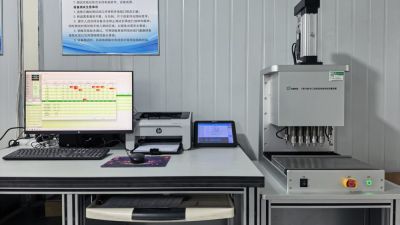
At our China factory, magnetic measuring instruments, tensile testing machines, thickness gauges, and metallographic microscopes are calibrated and documented according to industry requirements. Calibration records include instrument identification, reference standards, dates, and measurement results, supporting traceability consistent with ISO/IEC 17025 principles. Before production, inspectors also verify the production plan, process cards, inspection procedures, judgment standards, and material batch information for every shift. This document-control system helps prevent mismatched criteria and improves confidence in reported results.

Supplier selection should also consider sample-management discipline. Sampling tools, sample boxes, labels, and retention records are checked before use to protect specimen identity from cutting through final evaluation. A qualified supplier should provide clear inspection data, defined acceptance criteria, calibration evidence, and prompt access to batch documentation. These controls help buyers compare material performance objectively and reduce the risk of inaccurate position control during incoming inspection, process verification, and final quality assessment.

FAQS

What should buyers confirm before contacting a silicon manganese steel supplier?

Confirm the required grade, standard, mechanical properties, heat treatment, and dimensional tolerances. A grade name alone is insufficient. Check carbon, silicon, manganese, phosphorus, sulfur, and residual element limits.

Which documents should a supplier provide for each batch?

Request a recent mill test certificate from the same production route. It should show the heat number, production date, test method, and sampling location. “Typical composition” is too vague. Ask for measurable limits.

How can buyers verify chemical composition?

Compare the certificate with independent laboratory results when the order is important. Test carbon, silicon, manganese, phosphorus, sulfur, and trace elements. Do not rely on paperwork alone. I learned that shortcut can fail.

How does product form affect supplier selection?

Choose the form that matches your manufacturing process. Plates need stable thickness and flatness. Bars need controlled diameter and straightness. Wire rod needs a suitable surface for drawing. The right grade can still arrive in the wrong form.

What product details should be written into the purchase agreement?

Specify packing, cutting length, edge condition, surface quality, moisture, and allowable defects. Request sample photos and inspection records. A small trial batch can expose hidden problems. Specifications are sometimes written too quickly.

How should buyers evaluate quality certifications?

Check the issuing body, validity dates, facility address, and covered processes. Confirm that the certificate includes alloy production and testing. A general quality certificate does not guarantee stable chemistry. Verify registration independently.

What should buyers inspect during a factory visit?

Look for calibrated spectrometers, labeled raw materials, sealed sample bags, and traceable heat records. Ask how off-specification material is quarantined and retested. Operators should explain corrective actions clearly. Manual furnace records may miss readings.

How can buyers judge capacity and delivery reliability?

Request twelve months of production records, furnace numbers, rated capacity, and utilization rates. Compare monthly output with peak demand and safety stock. Define lead time in writing. Include production, testing, inland transport, and port handling.

What factors reveal long-term supply stability?

Review raw-material sources, backup electricity, maintenance planning, laboratory capacity, and export documents. Examine rejected batches, not only successful shipments. Score performance every quarter. One excellent audit proves little.

Conclusion

Choosing the right Silicon Manganese Steel supplier in 2026 requires a structured evaluation of both technical capability and commercial reliability. Start by defining the steel’s intended applications, then confirm the required grade, chemical composition, dimensions, and product form. A dependable supplier should provide clear documentation, consistent quality certifications, traceable testing procedures, and production standards that match your project requirements.

You should also compare manufacturing capacity, lead times, inventory availability, and the supplier’s ability to maintain stable deliveries during demand changes. Pricing should be assessed together with logistics costs, payment conditions, minimum order quantities, warranty provisions, and other contract terms. Before making a long-term commitment, verify the supplier’s reputation through factory audits, material samples, inspection reports, and references from comparable customers. This careful process can help reduce quality risks, avoid supply interruptions, and establish a more reliable purchasing partnership.


Isabelle

Isabelle

Isabelle is a dedicated marketing professional at Tangshan Shouyu Electromagnetic New Materials Co., Ltd., a high-tech enterprise established in 2022 in the Yutian County Industrial Park of Tangshan City, Hebei Province. With a profound expertise in the industry, she plays a pivotal role in......
Previous Top 10 Types of Oriented Silicon Steel for Global Buyers