• sns01
  • sns02
  • sns03-1
  • sns04
Leave Your Message
0%

Industrial Steel isn’t just a price decision anymore. By 2026, buyers around the world need to look at strength, chemistry, carbon intensity, traceability, and whether delivery actually holds up. The World Steel Association put crude steel production at roughly 1.88 billion tonnes in 2024. But that huge number can hide a lot—mills, regions, and production routes can differ way more than you’d expect.

Carbon is a big part of this too. The IEA estimates iron and steel is responsible for about 7% of global energy-related CO2 emissions. A cheaper coil might look good upfront, but it can bring higher environmental costs down the road. So buyers should dig into mill certificates, heat numbers, inspection records, recycled content, and verified emissions data. And don’t forget port access, insurance, tariffs, payment terms, and disruption risks. A spreadsheet alone? It won’t catch every weak spot.

Edwin Basson, Director General of the World Steel Association, once called steel “essential to modern life and the transition to a low-carbon economy.” That’s a good reminder that sourcing has a bigger meaning. Industrial Steel goes into bridges, machinery, energy systems, and infrastructure. Still, “green” claims need proof—not just nice wording. Independent verification helps a lot here.

A practical sourcing process starts with the application. A bridge component and an automotive stamping part won’t have the same priorities. Grade, tolerance, surface finish, welding behavior, and corrosion exposure all need to be clear before you start comparing suppliers. Factory audits can also reveal inconsistent testing or weak storage practices. Small details really do matter.

And yes, some decisions will stay imperfect. Forecasts change. Freight rates move. Even good mills can miss schedules. This guide looks at how procurement teams can balance technical performance, commercial value, compliance, and resilience when they’re choosing Industrial Steel for global supply chains in 2026.
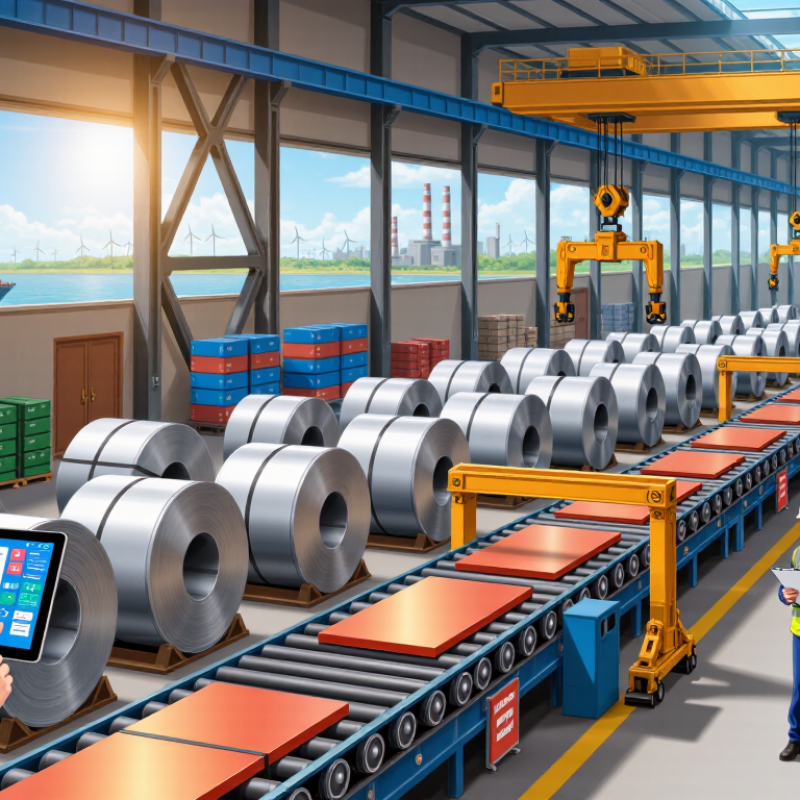
How to Choose Industrial Steel for Global Sourcing in 2026?

Define the Industrial Steel Requirements for Your Global Sourcing Project

How to Choose Industrial Steel for Global Sourcing in 2026?

Define the Industrial Steel Requirements for Your Global Sourcing Project

Start with the application, not the supplier’s catalog. Record load, temperature, corrosion exposure, forming method, weldability, and service life. A bridge plate needs different evidence than a transformer core. World Steel Association data shows global crude steel production reached about 1.88 billion tonnes in 2024. That scale creates choice, but also uneven quality control. Your specification should state grade, thickness tolerance, surface condition, test method, and acceptable defects.

For electrical equipment, High Grade Oriented Silicon Steel Silicon Steel Sheets require precise magnetic-loss and permeability values. These figures must match the operating frequency and core design. The International Energy Agency’s Electricity 2024 report expects global electricity demand to grow strongly through 2026. Grid upgrades may increase demand for efficient electrical steel. Do not rely on a certificate alone. Request heat numbers, mill test reports, inspection records, and independent verification when risk is high.

Tips: Build a one-page technical schedule. List mandatory standards and critical tolerances. Ask for samples from the actual production route. Check packaging against humidity, salt exposure, and long ocean transit. Keep two approved sources where practical. I have seen projects fail because the material met the grade, but not the coating, flatness, or delivery condition. That gap deserves a review.

Compare Steel Grades, Standards, and Application-Specific Performance

Global steel sourcing becomes safer when grade, standard, and service condition are assessed together.

A designation alone does not predict field performance. Carbon steel, low-alloy steel, and stainless steel respond differently to stress, heat, moisture, and welding. Compare yield strength, tensile strength, elongation, hardness, and impact toughness. These values reveal how steel may behave during fabrication and operation.

Toughness matters greatly in cold climates. Not optional.

Standards define testing methods, dimensions, tolerances, and documentation.

Common references include ASTM, EN, and ISO requirements. However, equivalent-looking grades may not be interchangeable. Requirements can differ in chemistry, impact testing, and heat treatment. Confirm the applicable standard edition before purchasing.

Request mill certificates, heat numbers, inspection results, and welding records.

A certificate without traceable identification creates uncertainty. That gap is common.

Application changes selection.

A structural beam needs reliable strength and weldability.

Pressure equipment needs controlled chemistry and verified toughness.

Mining plates need abrasion resistance and practical repair options.

Outdoor coastal service may require stronger corrosion protection.

For low-temperature projects, specify impact testing at the actual design temperature. During supplier reviews, I have seen technically correct grades fail because thickness, delivery condition, or fabrication methods were ignored.

Specifications are sometimes incomplete.

That weakness deserves attention. A clear comparison table can expose missing requirements before production begins.

Evaluate Suppliers, Production Capabilities, and Quality Certifications

Choosing industrial steel for global sourcing requires more than comparing price per ton. Supplier evaluation should begin with traceable production records, not sales presentations. Ask for furnace capacity, rolling schedules, minimum order quantities, and realistic lead times. A capable mill should explain how it manages alloy chemistry, thickness tolerance, surface defects, and shipment delays.

Request a recent mill test certificate for each heat number. Check carbon, manganese, sulfur, phosphorus, tensile strength, yield strength, and elongation. For silicon-sensitive applications, review Steel Si content against the purchase specification. Independent laboratory testing can confirm these values before loading. It costs more, but one failed batch can cost much more.

Production capability also depends on equipment. Confirm whether the supplier performs hot rolling, cold rolling, slitting, leveling, cutting, and protective packing in-house. Ask to inspect sample coils, edge conditions, and rust-prevention methods. Quality certifications matter, but certificates are evidence, not proof. Verify their scope, expiry date, issuing body, and audited production site. ISO 9001 supports process control, while product-specific certificates may address chemical and mechanical requirements.

Small details reveal experience. Can the supplier provide heat-level traceability after repacking? Do inspectors record furnace temperature and gauge calibration? A polished audit can still miss weak communication. I have seen specifications accepted too quickly, with packaging treated as an afterthought. That mistake deserves reflection. Clear inspection plans, agreed samples, and documented corrective actions create more reliable cross-border sourcing.

How to Choose Industrial Steel for Global Sourcing in 2026? – Evaluate Suppliers, Production Capabilities, and Quality Certifications
Evaluation Dimension Reference Benchmark for 2026 Sourcing Documents and Verification Methods Key Sourcing Risk Controlled Suggested Weight
Material Specification Confirm the exact grade, product form, dimensions, tolerances, delivery condition, surface condition, and applicable standard. Common references include ASTM, EN, JIS, and ISO material standards. Approved technical specification, purchase order, material standard, dimensional drawings, and sample mill test certificate. Substitution with a lower-strength grade or non-equivalent standard. 15%
Production Route Match the production route to the application: basic oxygen furnace or electric arc furnace steelmaking, followed by casting, hot rolling, cold rolling, heat treatment, forging, or finishing as required. Process flow chart, equipment list, heat-treatment records, furnace and rolling-mill capability statement, and production audit. Inadequate metallurgical control, inconsistent properties, or unsuitable processing capability. 12%
Annual Capacity and Allocation Capacity should cover the contracted volume with documented allowance for maintenance, peak demand, and production interruptions. Do not assess capacity from installed equipment alone. Capacity by product line, recent production records, confirmed equipment availability, utilization data, and capacity-reservation terms. Allocation shortages, delayed shipments, and dependence on a single production line. 10%
Quality Management System A current ISO 9001 certification is a useful baseline for controlled processes, document management, corrective action, and customer complaint handling. Valid ISO 9001 certificate, certification scope, issuing certification body, audit dates, nonconformity records, and corrective-action reports. Uncontrolled process changes, weak traceability, and recurring quality defects. 12%
Product Certification and Inspection Require inspection and testing appropriate to the product. EN 10204 Type 3.1 is commonly used for manufacturer inspection certificates; independent inspection may be required for critical applications. EN 10204 3.1 certificate where specified, chemical analysis, tensile and impact results, hardness data, ultrasonic or other non-destructive testing reports, and independent inspection plan. False or incomplete certificates, undocumented test results, and undetected internal defects. 15%
Heat and Batch Traceability Every shipment should be traceable to heat number, batch, cast, coil, plate, bar, or forging identification, with records retained for the contractually required period. Heat-number mapping, labels, photographs before dispatch, production records, test certificates, and warehouse traceability procedure. Inability to identify affected material during a recall, complaint, or regulatory investigation. 12%
Dimensional and Surface Capability Verify tolerance capability against the applicable standard and drawing. For rolled products, confirm flatness, thickness variation, edge condition, surface class, and cut-length accuracy. Calibration records, inspection equipment list, capability studies, dimensional reports, surface inspection criteria, and representative production samples. Assembly problems, excessive machining, rejection at incoming inspection, and poor finished appearance. 10%
Environmental and Energy Controls Consider ISO 14001 for environmental management and ISO 50001 for energy management when emissions, customer reporting, or low-carbon procurement requirements apply. Valid certificate and scope, energy and emissions data, environmental permits, recycled-content declaration, product carbon-footprint method, and third-party verification where required. Inaccurate sustainability claims, reporting gaps, regulatory non-compliance, and future carbon-related costs. 8%
Worker Safety and Operational Compliance ISO 45001 certification or an equivalent documented occupational health and safety system is a positive indicator for high-risk steelmaking, rolling, forging, and finishing operations. Valid ISO 45001 certificate, safety procedures, incident statistics, emergency plans, contractor controls, and site-audit findings. Production interruptions, workplace incidents, legal exposure, and reputational damage. 6%
Export and Logistics Readiness Evaluate export documentation, packaging, seaworthy protection, Incoterms, port options, container or breakbulk suitability, and realistic lead-time performance. Packing specification, export-license requirements, commercial invoice template, certificate-of-origin process, historical on-time delivery data, and logistics contingency plan. Customs delays, corrosion during transit, demurrage, and missed production schedules. 10%
Use of the benchmark: These are procurement screening references rather than guarantees of supplier performance. Confirm the current certificate validity, accreditation scope, product standard, test method, and country-specific import requirements before placing an order.

Verify Material Traceability, Testing Records, and Compliance Documents

When selecting industrial steel for global sourcing in 2026, verify records before comparing prices. Request the heat number, mill test certificate, production date, and material grade. Match every number with the bundle tag, packing list, and purchase order. This simple cross-check can expose mixed batches. It matters.

For Si Steel, confirm the silicon content against the agreed specification and testing standard. Review chemical analysis, tensile strength, yield strength, elongation, hardness, and impact results where applicable. Check the test method, specimen direction, test temperature, and equipment calibration date. A result without testing conditions proves little. Ask whether an accredited independent laboratory witnessed the tests. Keep dated photos of heat markings and sealed bundles during inspection.

Compliance documents should include standard references, inspection plans, declarations, and nonconformance records. Verify that certificates match the shipment, not merely the supplier’s usual template. Check revision numbers and authorized signatures. An outdated certificate may look professional. It can still create serious procurement risk. Request corrective-action records when a result falls outside tolerance. Review them with the supplier’s technical representative, rather than accepting a verbal explanation. No system is perfect. Even strong documentation can miss a labeling error, so retain samples and conduct random verification before shipment.

Calculate Total Sourcing Costs, Logistics Risks, and Delivery Timelines

Global steel sourcing in 2026 demands more than a low mill quotation. Price a 20-ton coil from origin to factory. Include cutting, protective wrapping, inspection, export handling, ocean freight, insurance, duties, port charges, and inland delivery. Ask suppliers for weight tolerances and certificate details. Small differences matter. A two-percent yield loss can erase a tempting price advantage. Use recent freight quotations, not last year’s spreadsheet. Rates change quickly.

Build a landed-cost model with three scenarios: normal, delayed, and disrupted. Add currency movement, storage, demurrage, rework, and financing time. I once treated port storage as negligible. That assumption failed after a document correction delayed release by six days. Keep a contingency, commonly 5–10 percent, but justify it by route and material risk. Independent pre-shipment inspection can verify dimensions, surface condition, packaging, and heat numbers before loading. It costs money. It may prevent a larger dispute.

Delivery timing should be measured from purchase order approval to usable steel on the production floor. Map mill capacity, rolling schedules, booking cutoffs, customs review, port congestion, weather, and final trucking. Request a firm production window and a latest acceptable arrival date. Use milestone updates with evidence, such as packing lists and loading records. Never rely on “ready to ship.” For critical projects, split volume across approved routes or shipment windows, where cash flow permits. That reduces exposure, although it can increase handling and inspection costs. My forecasts still contain uncertainty. Plan for it openly.

Select Contracts, Inspections, and Risk Controls for 2026 Procurement

How to Choose Industrial Steel for Global Sourcing in 2026?

A 2026 steel contract should control evidence, not only price. The World Steel Association reported 1,882.6 million tonnes of crude steel production in 2024. That scale creates supply options, but also uneven documentation. Specify grade, heat number, dimensions, tolerances, coating, packaging, and delivery terms. Require a mill test certificate, preferably EN 10204 3.1, with chemical and mechanical results linked to each bundle. Add remedies for substitution, late delivery, and failed testing. Steel Mfg capability must be verified, not assumed.

Inspection plans should match the material’s use. A pre-shipment check can confirm markings, quantity, surface condition, and dimensions. For critical plate, use independent sampling, positive material identification, and ultrasonic testing when specified by the design. Confirm the laboratory’s ISO/IEC 17025 competence. OECD market analysis projects global excess steel capacity could reach about 721 million tonnes by 2027. This pressure may encourage aggressive offers and weaker controls. Cheap steel is not cheap after rework.

Risk controls need practical limits. Split large orders between qualified sources where consistency allows. Keep a modest safety stock for long-lead grades. Link final payment to accepted inspection records, but avoid clauses nobody can enforce. I have seen buyers request every certificate, then fail to review heat numbers. That gap matters. Recheck the inspection checklist against the first shipment, because the original version is rarely perfect.

End-to-End Magnetic Testing of Oriented Silicon Steel: Methods, Stages, and Quality Control

End-to-End Magnetic Testing of Oriented Silicon Steel: Methods, Stages, and Quality Control

Oriented silicon steel requires precise magnetic evaluation throughout the manufacturing process, from raw material preparation to final inspection. End-to-end testing begins with sampling and surface checks, followed by measurements of core loss, magnetic induction, permeability, and coating condition. Instruments should be calibrated regularly, while standardized test conditions ensure that results remain accurate and comparable across production batches.

A closed-loop testing system connects measurement results with process control. During rolling, annealing, coating, and finishing stages, real-time data can identify changes in grain orientation, stress, thickness, or insulation performance. When deviations appear, operators can adjust process parameters promptly instead of waiting for final inspection. This approach helps reduce material variation, improve production efficiency, and prevent recurring defects.

Final quality control combines automated testing with traceable data management. Each coil or sheet can be evaluated against defined magnetic specifications, with results linked to its processing history. Continuous feedback allows manufacturers to maintain low core loss, high magnetic induction, and stable quality across large production volumes. By integrating testing, analysis, and process adjustment, the entire production line becomes more consistent, transparent, and capable of delivering reliable oriented silicon steel for high-efficiency electrical equipment.

FAQS

What should buyers check before comparing steel prices?

Review production records, furnace capacity, rolling schedules, minimum order quantities, and realistic lead times. Price is only one detail. Confirm the supplier can control chemistry, thickness, surfaces, and delays.

Which documents should accompany each steel shipment?

Request the heat number, material grade, production date, mill test certificate, packing list, and purchase order. Match every number carefully. This can reveal mixed batches or incorrect labels.

What information should a mill test certificate include?

Check carbon, manganese, sulfur, phosphorus, tensile strength, yield strength, and elongation. For silicon-sensitive steel, verify silicon content against the agreed specification. A result without test conditions proves little.

How can buyers verify testing reliability?

Review the test method, specimen direction, temperature, and equipment calibration date. Ask whether an independent accredited laboratory witnessed the testing. Keep photos of marked bundles and sealed packaging.

What production capabilities should a supplier demonstrate?

Confirm whether hot rolling, cold rolling, slitting, leveling, cutting, and protective packing occur in-house. Inspect sample coils, edge conditions, surface quality, and rust-prevention methods. Equipment lists can sound impressive. Verify them.

Do quality certificates prove that steel is acceptable?

No. Certificates are evidence, not proof. Verify their scope, expiry date, issuing organization, and audited production site. The certificate must match the actual shipment, not a familiar template.

What should a steel contract specify?

Define grade, heat number, dimensions, tolerances, coating, packaging, and delivery terms. Include remedies for substitutions, delays, and failed testing. Avoid clauses nobody can enforce.

Which inspections are useful before shipment?

Check markings, quantity, dimensions, surface condition, and packaging before loading. Critical materials may require independent sampling, material identification, or ultrasonic testing. Retain samples. Random verification still matters.

How can buyers reduce supply risks in 2026?

Split large orders between qualified sources when consistency allows. Keep modest safety stock for long-lead grades. Link final payment to accepted inspection records.

What common mistake deserves more attention?

Buyers sometimes request every certificate but fail to review heat numbers. Packaging may also become an afterthought. That gap matters. Recheck the checklist after the first shipment.

Conclusion

Choosing Industrial Steel for global sourcing in 2026 requires a structured evaluation from technical requirements to contract execution. Buyers should first define the project’s operating conditions, including strength, corrosion resistance, temperature exposure, dimensions, surface finish, and expected service life. Comparing grades and international standards helps ensure that the selected material performs reliably in its intended application rather than being chosen solely on price.

Supplier assessment should cover production capacity, process control, quality certifications, testing equipment, and experience with export orders. Buyers should also verify heat numbers, mill certificates, inspection reports, and compliance documentation to maintain full material traceability. A realistic sourcing decision must include the total cost of ownership, including material prices, inspection fees, packaging, freight, duties, insurance, currency changes, and possible delays. Finally, clear contracts, agreed acceptance criteria, third-party inspections, staged payments, contingency planning, and defined remedies for nonconforming goods can reduce procurement risks and support dependable delivery throughout 2026.

Sophia

Sophia

Sophia is a dedicated professional marketing specialist at Tangshan Shouyu Electromagnetic New Materials Co., Ltd., a high-tech enterprise established in 2022. Located in the Yutian County Industrial Park of Tangshan, Hebei Province, the company focuses on the research, development, production, and......
Previous Top Oriented Silicon Steel Strip Manufacturers Worldwide