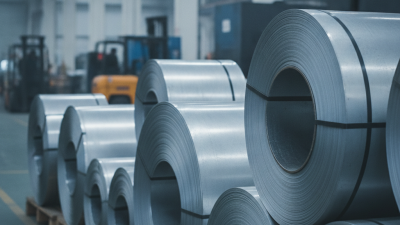
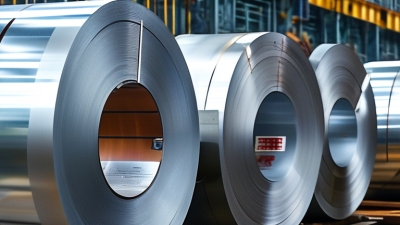
So, when we talk about China's silicon steel strip industry—it's a big deal for things like transformer cores and motor laminations. The whole point is that magnetic performance really impacts efficiency. Now, if you're a buyer, don't just look at the price tag. I mean, a low quote might catch your eye, but you've got to dig deeper. Check the grade, thickness tolerance, coating, core loss, and make sure they're consistent across batches. A neat little sample? That's not gonna cut it. You need to see the production records. That's where the real story is.
Okay, so these numbers aren't directly about silicon steel demand, but they do paint a pretty big picture. The International Energy Agency's report on electricity grids and secure energy transitions says grid investment needs to climb from around $300 billion a year today to over $600 billion by 2030. And the World Steel Association reported that global crude steel production was 1.89 billion tonnes in 2023. Sure, those figures don't give us silicon steel demand in exact terms, but they show the sheer scale of the steel and electricity infrastructure behind all of this. So, Fatih Birol, the IEA's executive director, keeps hammering on the point that we can't get anywhere with energy transitions if we don't beef up our grid infrastructure. And he's absolutely right – it's a no-brainer. (That's my paraphrase of his overall position, not a direct quote, by the way.)
When you're comparing Chinese silicon steel strip makers, you want to cut through the fluff and get down to the real specifics. I'm talking about product specs, how they actually inspect stuff, their track record with exports, and whether they can deliver consistent coils without hiccups. Here's a pro tip: always ask for test reports that clearly show the grade and how they measured it. And double-check that the magnetic properties they quote actually match what you need for your application. You'd be surprised – even tiny differences can make a big difference in the end. Look, you can't just take supplier claims at face value. You really need to verify them against the actual documents and samples. This overview is helpful, sure, but it's no substitute for independent testing or a proper factory audit.
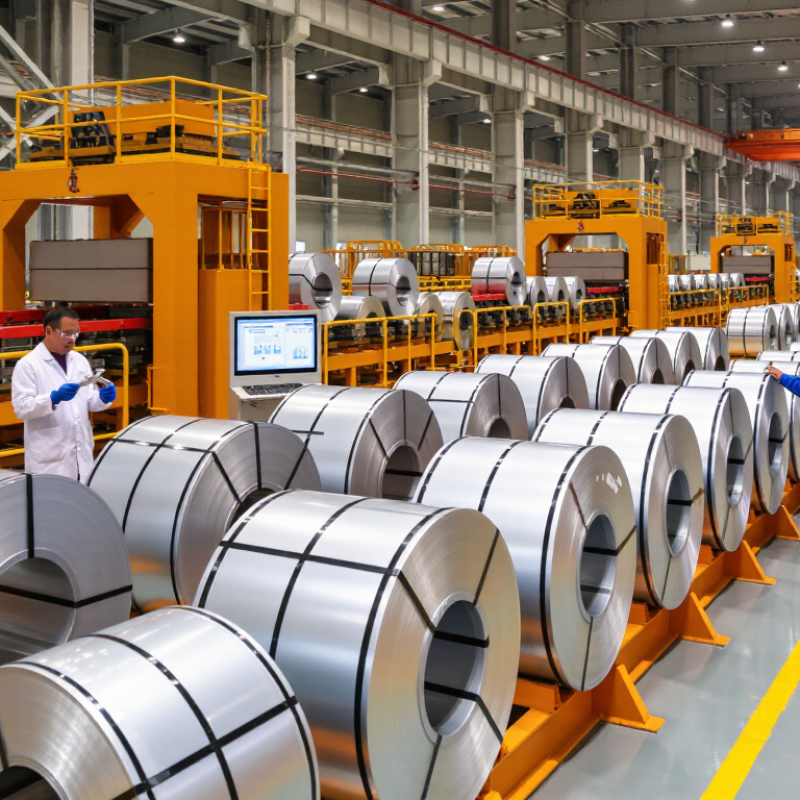
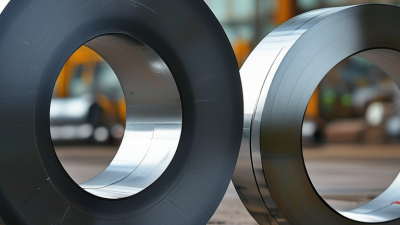
Silicon steel strip is a thin electrical steel product designed to reduce energy loss in magnetic cores. Its silicon content raises electrical resistivity, while controlled processing helps shape its magnetic behavior. You’ll find it in transformer cores, motors, and generators. Small differences matter.
A common classification separates grain-oriented and non-oriented silicon steel. Grain-oriented grades carry magnetic flux most efficiently along the rolling direction, making them useful in transformer cores. Non-oriented grades perform more evenly in different directions and are widely used in rotating machinery. These categories are helpful, but they do not tell the whole story. Thickness, coating, and processing condition also affect performance.
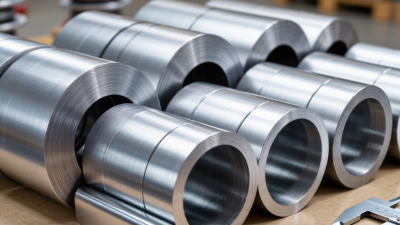
Slit Silicon Steel Strip is made by cutting wider coils into narrower widths. For a stacked motor core, uneven edges or excess burrs can complicate assembly and affect insulation between layers. Buyers should check width tolerance, edge condition, and magnetic-loss data against the intended design. A low loss figure alone can be misleading; operating frequency and flux density matter too. Specifications vary, so confirm the test conditions before comparing grades.
China Best Silicon Steel Strip Manufacturers and Suppliers
Key Properties and Performance Standards of Silicon Steel
Silicon steel strip is selected for its magnetic performance, not appearance. Core loss, magnetic polarization, thickness, and coating quality all influence energy use and manufacturing consistency. IEC 60404-2 defines Epstein-frame methods for measuring magnetic properties, while IEC 60404-8-4 and IEC 60404-8-7 set requirements for fully processed non-oriented and grain-oriented electrical steel. Buyers should compare grades at matching test conditions. For example, P1.5/50 reports loss at 1.5 tesla and 50 hertz. Small differences matter.
The International Energy Agency’s 2023 report, Electricity Grids and Secure Energy Transitions, says annual grid investment needs to rise from about USD 300 billion to more than USD 600 billion by 2030. That expansion makes efficient transformers and motors increasingly important, though steel alone does not determine equipment efficiency. Ask suppliers for measured core-loss data, thickness tolerances, coating details, and test methods. Check samples for flatness and edge condition; burrs can complicate stacking and insulation. A tidy datasheet is useful, but it cannot replace consistent batch testing. Sometimes specifications leave room for interpretation, so clarify test conditions before comparing offers.
How Silicon Steel Strip Is Manufactured in China
In China, silicon steel strip production starts with carefully controlled steelmaking. The silicon content is adjusted to support the strip’s magnetic properties, while unwanted impurities are kept low. Cast slabs are reheated, then passed through hot-rolling stands until they reach a thinner gauge. Their surfaces are inspected before pickling removes scale. Cold rolling brings the steel closer to its final thickness and creates a smooth, consistent surface. Small differences matter.
Annealing follows, using controlled heat and cooling to develop the required grain structure. Grain-oriented and non-oriented grades need different processing routes, so settings depend on the intended electrical application. Some products receive an insulating coating to reduce losses between stacked layers. Quality checks commonly include thickness readings, surface inspection, burr checks, and magnetic testing on sampled material. A clean edge helps during slitting and handling. Still, no production line is perfectly uniform; coil position, temperature, and rolling conditions can affect results. That deserves attention. Reliable manufacturers document these variables and trace inspection results by coil, rather than relying on appearance alone.
Silicon steel strip guides magnetic flux inside transformer cores, motor stators, and generator laminations. In a distribution transformer, stacked laminations help reduce eddy-current losses while handling changing magnetic fields. Slitted Silicon Steel Strip lets manufacturers match strip widths to core designs and production lines. Burrs still matter: rough edges can complicate stacking and affect insulation.
Demand for these components is tied to electrification. The International Energy Agency’s Global EV Outlook 2024 reports nearly 14 million electric car sales in 2023, about 18% of all car sales. Traction motors use laminated electrical steel, while industrial motors drive pumps, compressors, fans, and conveyors. These are practical applications, not just automotive ones.
Grid equipment adds another significant use. The IEA report Electricity Grids and Secure Energy Transitions (2023) says annual grid investment may need to rise from about USD 300 billion to over USD 600 billion by 2030. That expansion implies more transformers and magnetic cores, though regional demand and specifications vary. A narrow strip is not automatically a better strip. Buyers should also check thickness, magnetic properties, coating, and edge quality; overlooking one detail can create problems during assembly.
China’s silicon steel strip landscape spans large integrated steelmakers and specialist processors. The World Steel Association’s World Steel in Figures 2024 reports that China produced 1,019.1 million tonnes of crude steel in 2023, out of 1,892.2 million tonnes worldwide. This scale supports a broad industrial supply base. Still, a caveat. Crude steel output is not electrical steel capacity, and it cannot confirm a supplier’s grade range or delivery performance.
For buyers, the useful comparison starts with application and specification. Oriented Silicon Steel Strip is used in transformer cores, where core loss, thickness tolerance, coating quality, and magnetic consistency matter. Non-oriented grades are more common in motors and generators. Ask suppliers for mill test certificates, sample data, and inspection details; check whether slit edges show burrs or uneven widths. Small defects matter. Some companies make the steel, while others slit or distribute it, so clarify who controls each production step. Supplier directories can help build a shortlist, but published capacity figures may be incomplete or hard to compare. A careful trial order is often more revealing than a polished catalogue.
| Comparison Dimension | Industry Landscape | Buyer Considerations |
|---|---|---|
| Main product families | China’s electrical-steel supply includes grain-oriented electrical steel (GOES) and non-oriented electrical steel (NGOES), supplied as thin sheet or strip for magnetic-core applications. | Choose the family according to the magnetic-field direction and operating requirements of the finished core. |
| Magnetic orientation | GOES is processed to provide favorable magnetic properties mainly along the rolling direction. NGOES is designed for magnetic performance in multiple in-plane directions. | GOES is commonly used in transformer cores; NGOES is widely used in rotating electrical machines and other applications where the field direction varies. |
| Typical applications | Electrical-steel strip is used in transformer and reactor cores, motors, generators, and other electromagnetic equipment. | Confirm the end-use design, core geometry, operating frequency, flux density, and thermal conditions before selecting a grade. |
| Thickness selection | Commercial electrical-steel products are available in different thicknesses; common offerings include gauges in the approximate 0.20–0.65 mm range, depending on product family and supplier. | Check the exact nominal thickness, tolerance, and applicable product standard in the quotation and technical data sheet. Availability varies by grade and mill. |
| Coatings and insulation | Electrical steel is often supplied with an insulating surface coating to limit inter-laminar eddy currents when the material is assembled into a laminated core. | Specify coating type and performance requirements, including insulation, welding or bonding compatibility, and any heat-treatment conditions. |
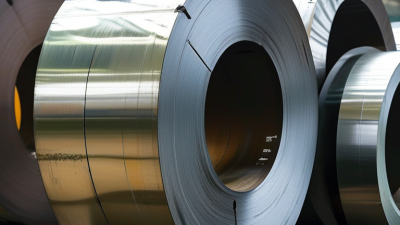
| Supply formats | Depending on the product and processing route, suppliers may offer coils or slit strip. Slitting and edge condition can affect downstream stamping and core assembly. | Confirm coil or slit-strip dimensions, inner and outer diameters, packaging, edge quality, and any width or burr limits. |
| Supplier capabilities | The supplier base includes steel producers and downstream processors. Available services can include slitting, inspection, packaging, and technical documentation; capabilities differ by supplier. | Assess production scope, traceability, export experience, sample availability, lead time, and the supplier’s ability to meet the required specification consistently. |
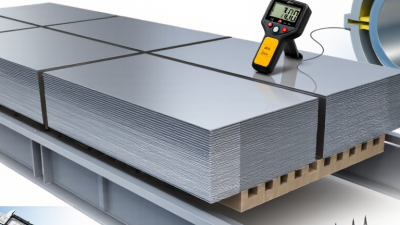
| Quality verification | Relevant checks can include thickness and width measurements, surface inspection, magnetic-property testing, coating evaluation, and review of material certificates. | Agree on test methods, acceptance criteria, certificate requirements, and inspection arrangements before placing an order. |
| Market comparison | Products should be compared by grade, thickness, magnetic properties, coating, dimensional tolerances, processing level, and delivery terms rather than by country of origin alone. | Specifications and availability change by product and producer. Verify current technical data and commercial terms directly with the prospective supplier. |
Selecting a Chinese silicon steel strip supplier starts with the application, not a catalog label. Define grade, thickness, width, coating, rolling direction, and target core-loss values before requesting quotations. Ask for test data measured at a stated frequency and induction; figures without conditions are hard to compare. Numbers can mislead.
Request a recent mill test certificate and traceability linking each coil to its production lot. Check thickness tolerance, burr height, surface condition, and slit-edge consistency on a physical sample. For High Grade Oriented Silicon Steel Silicon Steel Sheets, confirm the supplier can explain grain orientation and provide relevant magnetic-property records. A small trial order can reveal handling or packing issues that paperwork misses.
Evaluate communication as carefully as price. Clear answers about lead time, minimum order, packaging, and claim handling suggest a workable process. Verify factory capacity through a video call or independent inspection when the order value warrants it, and compare references where available. One successful sample does not prove steady production; repeatability matters, and inspection takes time. Some uncertainty remains.
The International Energy Agency’s *Electricity 2024* report projects that global electricity demand will grow by an average of about 3.4% annually through 2026. Expanding generation, transmission and distribution networks will increase the need for dependable transformers and reactors. Their magnetic cores rely on grain-oriented electrical steel (GOES), a specialized soft magnetic material designed to conduct power-frequency magnetic flux efficiently and help limit core losses.
For transformer manufacturers, choosing suitable GOES means balancing magnetic performance, thickness, coating and processing consistency with the equipment’s design requirements. China-oriented silicon steel suppliers can support this need with material for transformer and reactor cores, helping manufacturers pursue reliable energy conversion and transmission. High permeability and controlled core loss are especially important where equipment is expected to operate continuously under power-frequency magnetic fields.
The IEA’s *Electricity Grids and Secure Energy Transitions* (2023) report says annual grid investment needs to rise to more than USD 600 billion by 2030 to support secure, modern electricity systems. This outlook reinforces the value of dependable core materials throughout the supply chain. When sourcing oriented silicon steel, manufacturers should assess technical specifications, quality consistency and suitability for the intended core design to support transformer performance and long service life.
It is thin electrical steel used to reduce energy loss in magnetic cores. Silicon raises its electrical resistivity. Small differences matter.
Grain-oriented steel carries magnetic flux most efficiently along its rolling direction, making it useful for transformer cores. Non-oriented steel performs more evenly across directions and suits motors and generators.
Wider coils are cut into narrower strips. Check width tolerance, edge quality, and burrs. Burrs can complicate stacking and insulation.
Compare core loss, magnetic polarization, thickness, and coating quality. These affect energy use and manufacturing consistency. Appearance tells little.
It reports core loss measured at 1.5 tesla and 50 hertz. Compare figures only when test conditions match.
Consistent methods make magnetic-property results easier to compare. Ask for the method and conditions behind each reported figure. Details can be vague.
Check flatness, strip width, coating, and edge condition. Look closely for burrs before stacking sample pieces.
No. Operating frequency, flux density, and equipment design also affect efficiency. Steel alone cannot tell the whole story.
Request measured core-loss data, thickness tolerances, coating details, and batch test results. A tidy datasheet helps, but it is not enough.
This article introduces Silicon Steel Strip, a specialized electrical steel valued for its magnetic performance and role in reducing energy losses. It explains how silicon steel is classified, including differences in grain orientation and intended use, and outlines key properties such as magnetic induction, core loss, thickness, and surface quality. The article also describes the main production stages in China, from steelmaking and rolling to annealing and finishing, showing how process control contributes to consistent material performance.
Silicon Steel Strip is widely used in transformers, motors, generators, and other electrical or industrial equipment. The article reviews China’s manufacturing and supply landscape and offers practical guidance for choosing a supplier. Buyers can assess product specifications, quality-control procedures, production capacity, testing records, delivery reliability, and technical support to determine whether a supplier can meet their application and project requirements.